For many children learning to read, recognising letter sounds comes quite quickly. They can tell you that s says /s/, a says /a/ and t says /t/. Yet when you ask them to read the word sat, they pause...
/s/... /a/... /t/...
…and then look at you for the answer. If this sounds familiar, don't worry. Blending is one of the most common challenges children experience when learning to read, and it is something I see regularly as a primary teacher. The good news is that blending is a skill that can be taught, practised and strengthened with the right support.
What Is Blending?
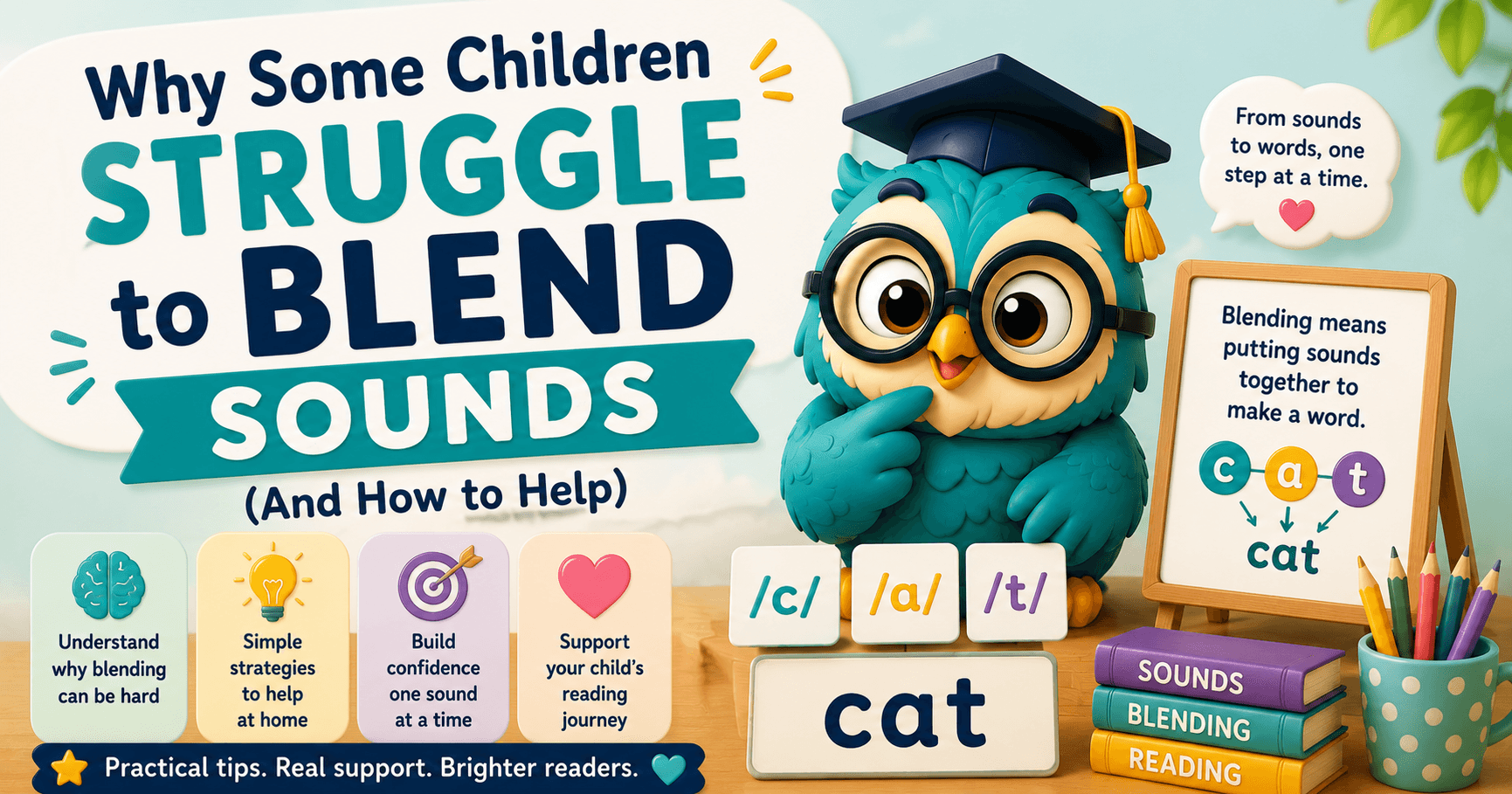
Blending is the process of putting individual sounds together to read a word. For example:
/c/ – /a/ – /t/ becomes cat
Children are not learning three separate sounds. They are learning to hear those sounds merge together into one spoken word. Once blending becomes automatic, reading becomes far smoother and more enjoyable.
Why Is Blending So Important?
Blending is the bridge between:
Knowing sounds
↓
Reading words
Without blending, children may recognise every sound perfectly but still struggle to read. It is often the missing piece that turns phonics knowledge into confident reading.
Why Do Some Children Find Blending Difficult?
There isn't one single reason. Often, several factors work together.
1. They Know the Sounds—but Can't Hold Them in Memory
Blending places demands on working memory. A child has to:
recognise each sound
remember it
keep listening
merge all the sounds together
For some children, especially younger learners, this is a lot to do at once. The more secure their letter sounds become, the easier blending usually feels.
2. They Are Saying Letter Names Instead of Sounds
One of the most common mistakes I see is practising with alphabet names instead of pure sounds.
For example:
C – A – T
is much harder to blend than
/c/ /a/ /t/
Using pure sounds helps children hear the word naturally.
3. Extra Sounds Are Being Added
Many adults accidentally pronounce consonants like this:
"buh"
"tuh"
"muh"
Instead of
/b/
/t/
/m/
Those little extra vowel sounds make blending much more difficult. Imagine trying to blend:
buh-a-tuh
instead of
/b/ /a/ /t/
Using clean, pure sounds makes a huge difference.
4. The Sounds Aren't Yet Automatic
Some children still need time to recognise individual graphemes. If every sound requires lots of thinking, there is very little mental energy left for blending. Children need lots of opportunities to revisit previously taught sounds before introducing new ones. Confidence comes through repetition.
5. They Are Trying to Guess the Word
Sometimes children look at:
the picture
the first letter
the shape of the word
instead of decoding every sound. Guessing might appear successful at first, but it doesn't help children become independent readers. Encourage your child to trust the sounds.
6. They Haven't Had Enough Oral Blending Practice
Blending doesn't always need to involve printed words. Children can practise blending purely through listening.
For example, say:
/d/ ... /o/ ... /g/
Ask:
"What word?"
This develops blending before children even look at letters. It's one of my favourite activities because children often don't even realise they're practising phonics.
7. They Are Rushing
Parents naturally want children to read quickly. However, speed comes after accuracy. Encourage your child to:
look carefully
say each sound
blend slowly
read the whole word
Fluency develops over time.
8. They Lack Confidence
Sometimes the difficulty isn't knowledge. It's confidence. Children who have experienced repeated struggles often become reluctant to attempt unfamiliar words.
You may hear:
"I don't know."
"I can't do it."
Rather than:
"I'll try."
Celebrating effort rather than perfection helps rebuild confidence.
How Can You Help at Home?
Fortunately, there are lots of simple ways to support blending.
1. Practise Little and Often
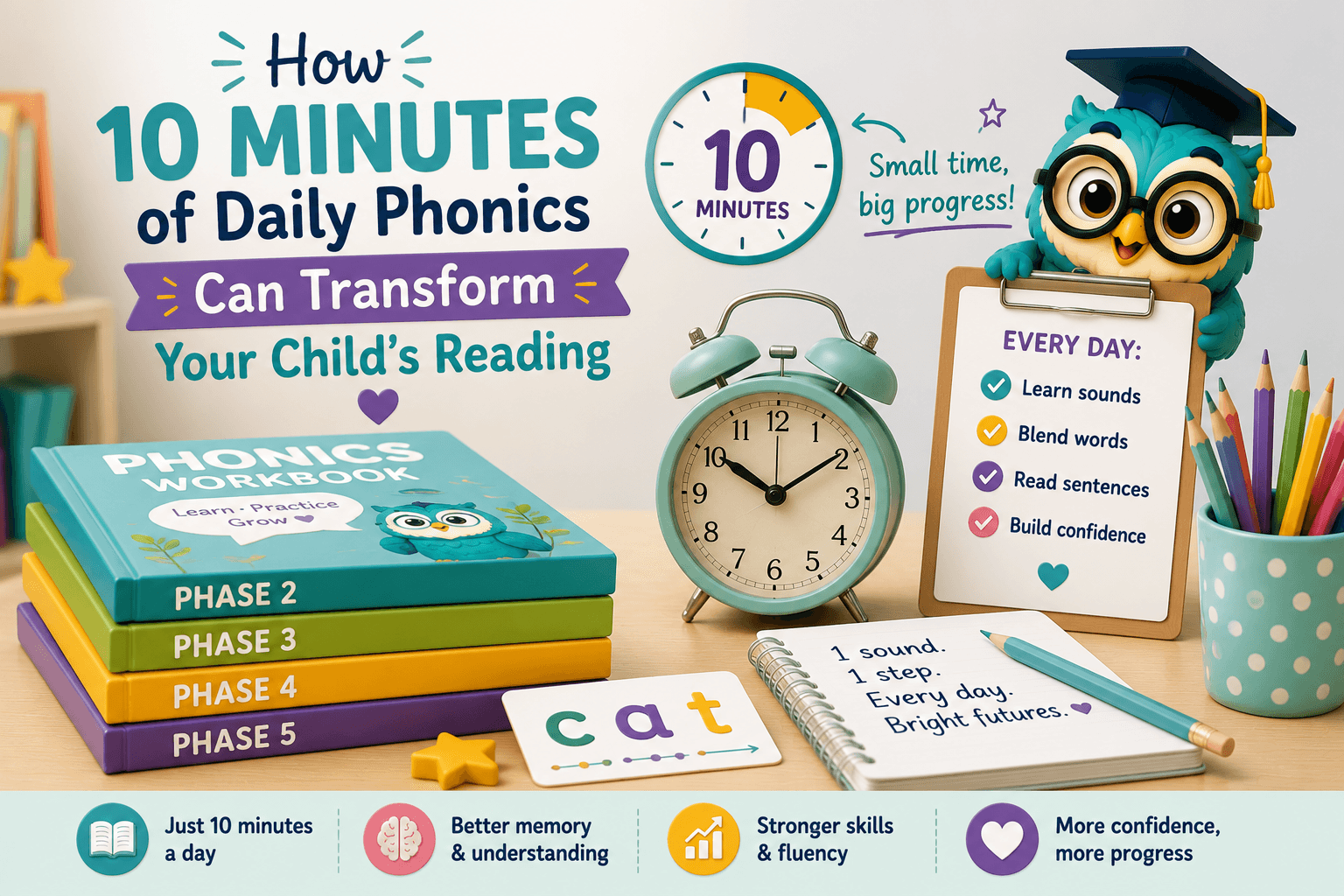
Ten minutes every day is usually more effective than one long session each week. Consistency is far more important than length.
2. Use Pure Letter Sounds
Always use the sounds children hear in words rather than alphabet names during phonics practice.
3. Blend Orally During Everyday Life
Turn blending into a game.
For example:
Can you get your /c/ /u/ /p/?
or
Where is your /h/ /a/ /t/?
Children often love these games because they don't feel like lessons.
4. Celebrate Success
Every correctly blended word deserves encouragement. Confidence grows through success. Even small improvements matter.
5. Read Decodable Books
Choose books that contain the sounds your child has already learned. If books contain too many unfamiliar patterns, children often resort to guessing. The right level helps children experience success.
6. Revisit Previously Learned Sounds
Children forget. That's completely normal. Regular retrieval helps strengthen long-term memory. Revisiting older sounds is just as important as learning new ones.
When Should I Be Concerned?
Every child progresses differently. However, if your child has had plenty of opportunities to practise and continues finding blending extremely difficult over a sustained period, it may be worth looking more closely at their current phonics knowledge. Often, the issue isn't blending itself. It's that earlier skills aren't yet fully secure. Identifying these gaps early can make a significant difference.
Not Sure Which Phonics Stage Your Child Is Working Within?
One of the biggest challenges parents face is knowing where to begin. Rather than guessing, start by understanding your child's current phonics stage.
Our FREE QFE Phonics Assessment helps identify:
current phonics phase
strengths
sounds to revisit
blending confidence
next learning steps
It provides a clear picture of where your child is now, making it much easier to choose appropriate support.
Looking for Extra Support?
Some children benefit from additional teaching alongside home practice. Our Live Online Phonics Programmes are designed specifically to help children build confidence with:
blending
segmenting
reading
spelling
tricky words
sentence reading
writing
Lessons last around 25 minutes, are taught by a qualified primary teacher and take place in small groups of no more than ten children. Children receive structured teaching, guided practice and regular encouragement in a calm, supportive environment.
If you prefer learning at home, our QFE Phonics Workbooks follow the same carefully sequenced progression and provide plenty of opportunities to revisit and practise blending skills independently.
Learning to blend sounds is one of the biggest milestones in becoming a reader. It can take time. It requires repetition. It requires patience. Most importantly, it requires confidence.
If your child is struggling to blend today, it doesn't mean they won't become a fluent reader tomorrow. With consistent practice, the right teaching and plenty of encouragement, blending gradually becomes automatic—and once it does, reading opens up a whole new world.
Ready to Help Your Child Become a More Confident Reader?
Download the QFE Phonics Assessment
Assess your child’s phonics skills at home, identify their current stage and discover exactly where to start.
Download the phonics assessment workbook
Join a Live Online Phonics Programme
Teacher-led, 25-minute lessons in small groups, designed to build confident, independent readers.
Book a One-to-One Phonics Consultation
Receive personalised advice about your child's reading, blending skills and phonics development, along with tailored recommendations to support progress at home.
Explore Our Phonics Workbooks
Structured printable workbooks that mirror our teaching approach and provide engaging, confidence-building practice at home.