Reading is one of the most important skills a child will ever learn, yet for many families, it can also be one of the most worrying. Perhaps your child seems to recognise some words but struggles to sound out unfamiliar ones. Maybe reading homework ends in frustration, or you're simply unsure whether they are making the progress they should be.
If you've ever wondered, "Is my child behind in phonics?", you're certainly not alone.
The reassuring news is this: Every child learns at their own pace.
Children develop reading skills at different rates, and needing extra time or practice does not automatically mean something is wrong. What matters most is understanding where your child is now so you can give them the right support at the right time.
What Is Phonics?
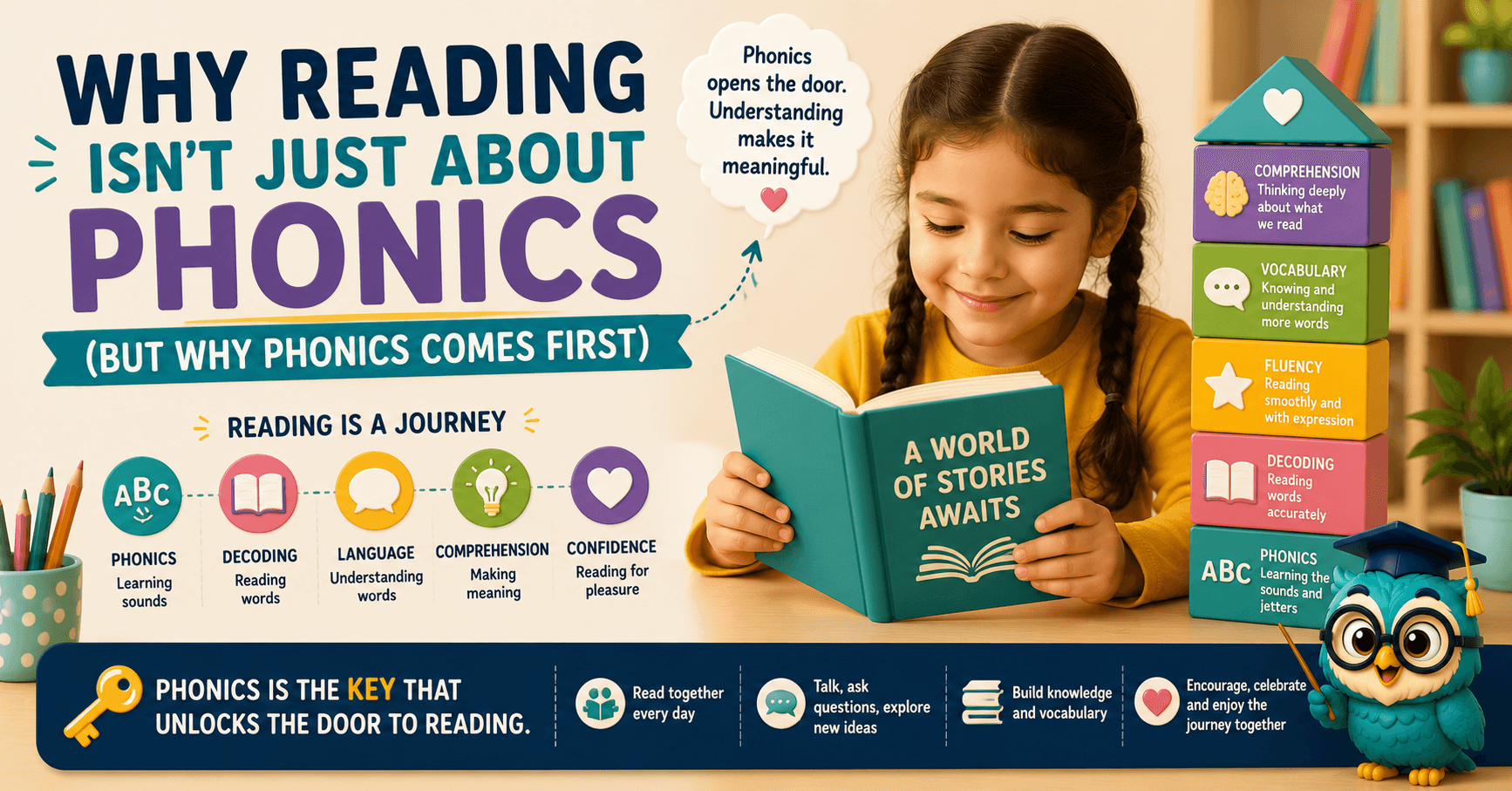
Phonics is the method children use to learn the relationship between letters (graphemes) and sounds (phonemes).
Children gradually learn how to:
recognise letter sounds
blend sounds together to read words
segment words into sounds for spelling
read increasingly complex words
build fluency and confidence
Rather than memorising whole words, children learn how to decode unfamiliar words independently. These skills provide the foundation for lifelong reading.
What Does "Behind" Actually Mean?
Many parents compare their child to classmates, siblings or friends. However, children develop at different rates, and progress is rarely perfectly linear.
Instead of asking,
"Is my child behind?"
it is often more helpful to ask,
"Which phonics skills are secure, and which ones still need practice?"
A child may simply need more time consolidating one stage before moving on. Strong foundations almost always lead to greater confidence later.
Signs Your Child May Need More Phonics Support
Every child is different, but you may notice some common signs.
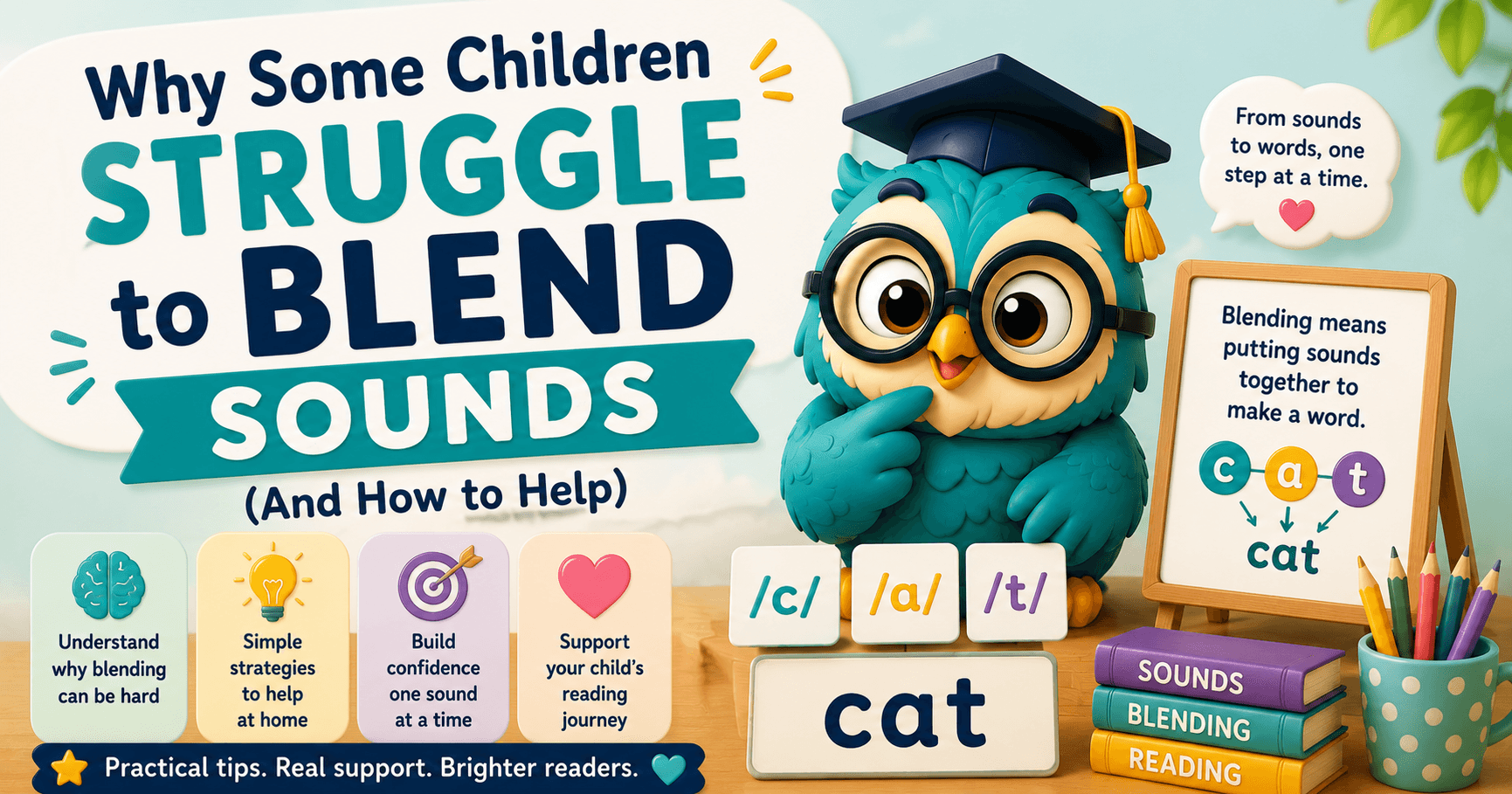
They struggle to blend sounds together
For example, they can say:
/c/ ... /a/ ... /t/
but cannot hear the word:
cat
Blending is one of the biggest milestones in early reading.
They guess words instead of decoding them
Some children rely on:
picture clues
the first letter
memory
rather than sounding words out. Guessing can sometimes hide gaps in phonics knowledge.
They regularly forget sounds they have already learned
Children naturally need repetition. However, if previously learned sounds are frequently forgotten, they may benefit from revisiting earlier learning before moving on.
They avoid reading
Children who find reading difficult often begin avoiding it.
You may hear:
"I don't want to."
"It's too hard."
"Can you read it?"
This often reflects confidence rather than motivation.
Reading is slow and effortful
Many early readers read slowly. However, if every word requires significant effort, your child may still be developing automatic recognition of sounds and patterns.
Spelling is much harder than reading
Spelling requires children to:
hear sounds
remember them
segment them
choose the correct graphemes
This places greater demands on working memory.
They become frustrated easily
Learning to read is challenging. If your child becomes upset or anxious during reading, they may simply need learning presented in smaller, more manageable steps.
Why Some Children Need Longer
There are many reasons why children progress at different rates.
Some children simply need:
more repetition
more opportunities to practise
more confidence
smaller learning steps
Others may have experienced:
disrupted learning
reduced reading opportunities
limited practice at home
gaps in previous teaching
None of these mean your child cannot become a confident reader.
The Biggest Mistake Parents Make
One of the most common mistakes is moving on too quickly. Parents understandably want their child to make progress, but introducing new sounds before earlier ones are secure often creates unnecessary gaps. A child who knows fewer sounds really well will usually make faster long-term progress than a child who has rushed through every phonics phase.
How to Check Your Child's Phonics Skills
Many parents are unsure where to begin.
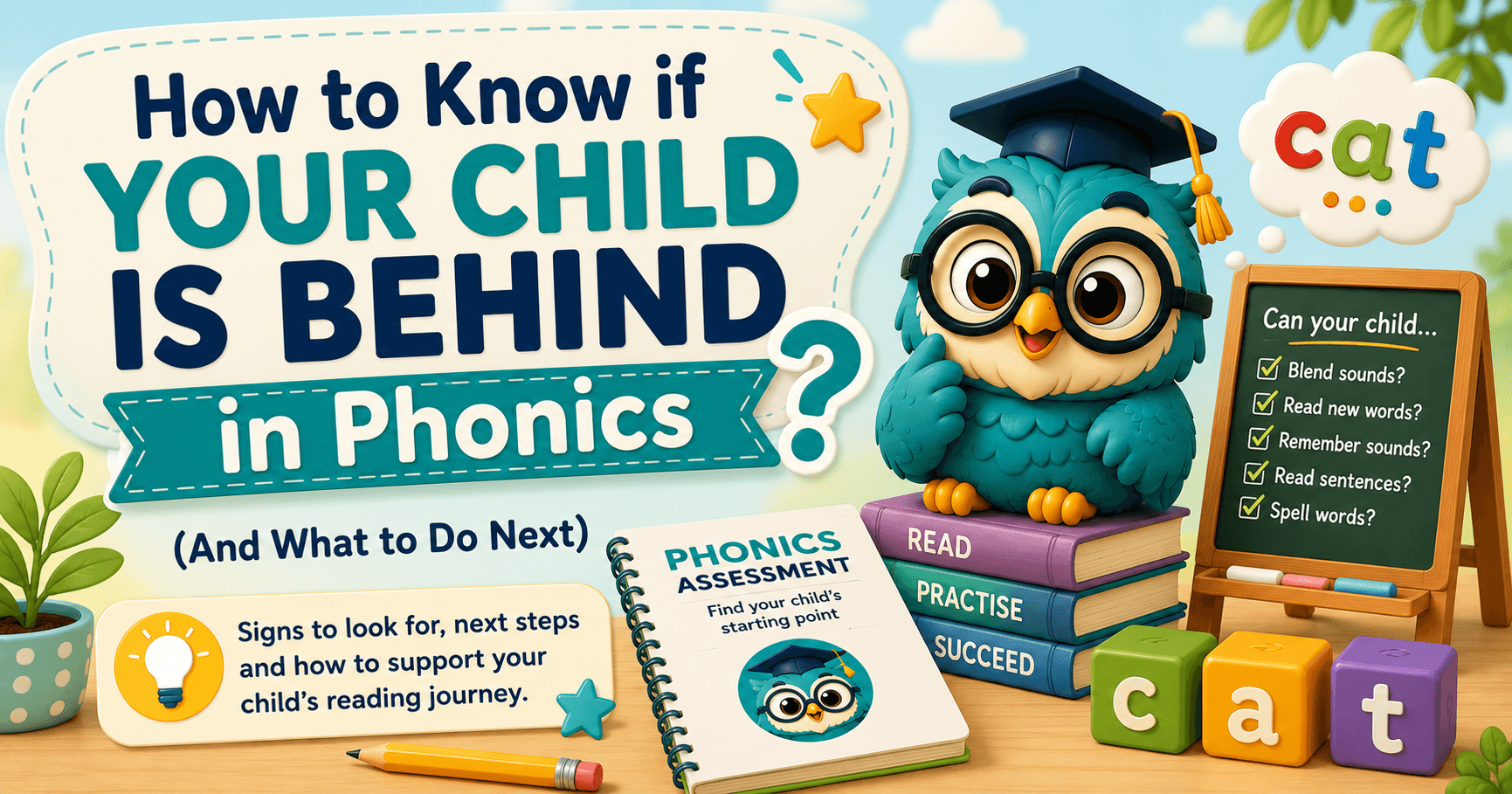
Ask yourself:
Can my child...
✔ recognise individual sounds?
✔ blend sounds into words?
✔ segment words for spelling?
✔ read unfamiliar words?
✔ recognise common tricky words?
✔ read simple sentences fluently?
If you're unsure, a structured assessment can help identify exactly where your child is currently working.
Introducing the QFE Phonics Assessment
To help families feel more confident supporting reading at home, we've created the QFE Phonics Assessment.
Unlike a formal test, this assessment is designed to be completed in a relaxed, supportive environment.
It helps you identify:
your child's current phonics phase
areas of strength
sounds that need revisiting
next learning steps
recommended resources
The assessment covers:
Letter sound recognition
Oral blending
Oral segmenting
Reading real words
Reading alien words
Tricky words
Spelling
Sentence reading
Sentence writing
Reading fluency
Most importantly, it gives you a clearer picture of where your child is now, allowing you to support them with confidence.
What Happens After the Assessment?
Once you know your child's current stage, supporting them becomes much easier. You can choose resources that match their needs instead of guessing where to start. At Quality First Education, we offer two ways to continue your child's phonics journey.
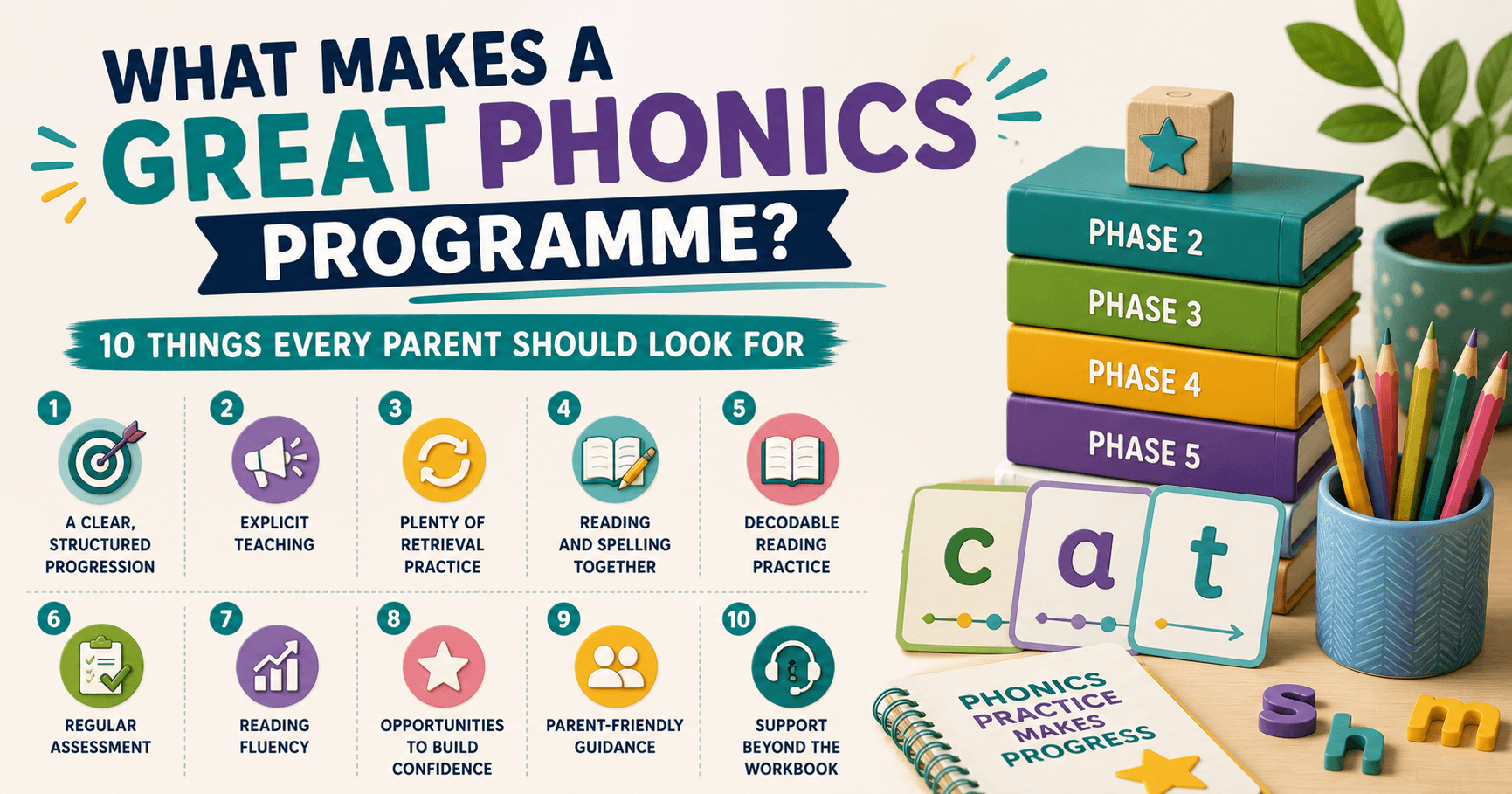
Option 1: Printable Phonics Workbooks
Our structured workbooks provide:
carefully sequenced lessons
reading practice
spelling activities
sentence reading
sentence writing
retrieval practice
parent guidance
Perfect for families who enjoy learning at home and want flexible, independent practice.
Option 2: Live Online Phonics Lessons
Some children benefit from direct teaching and regular encouragement.
Our small-group online sessions provide:
qualified teacher-led instruction
interactive learning
structured progression
confidence-building activities
maximum of 10 children per group
Each lesson lasts around 25 minutes, making them manageable, engaging and focused.
Want Personalised Advice?
Every child is unique.
If you'd like tailored guidance, you can also book a one-to-one phonics consultation. During your consultation, we'll discuss:
your child's current reading level
assessment results
areas of strength
any learning gaps
practical strategies you can use at home
which resources would best support their next steps
Sometimes, just one conversation can give parents the clarity and confidence they need.
Remember...
Learning to read is not a race. Some children master blending quickly. Others need more time. Some fly through Phase 3 but need longer consolidating Phase 5. All of these journeys are perfectly normal. The goal is not to move through phonics as quickly as possible.
The goal is to build secure foundations that allow children to become confident, independent readers for life.
Every sound learned.
Every word decoded.
Every sentence read.
Every page turned.
Is another step forward.
Ready to Support Your Child's Reading Journey?
Start with our FREE QFE Phonics Assessment
Discover your child's current phonics phase, identify any gaps and receive clear next steps by signing up for our newsletter.
Explore Our Phonics Workbooks
Structured, printable resources designed to build confidence through daily practice.
Browse the Phonics Workbook Collection
Join a Live Online Phonics Programme
Small-group lessons with a qualified primary teacher, designed to support confident, independent readers.
Book a One-to-One Phonics Consultation
Receive personalised guidance and practical advice tailored to your child's individual needs.
At Quality First Education, we believe every child can become a confident reader with the right support, the right pace and the right foundations.