When parents think about helping their child learn to read, many imagine they need to spend an hour every evening working through worksheets or reading books.
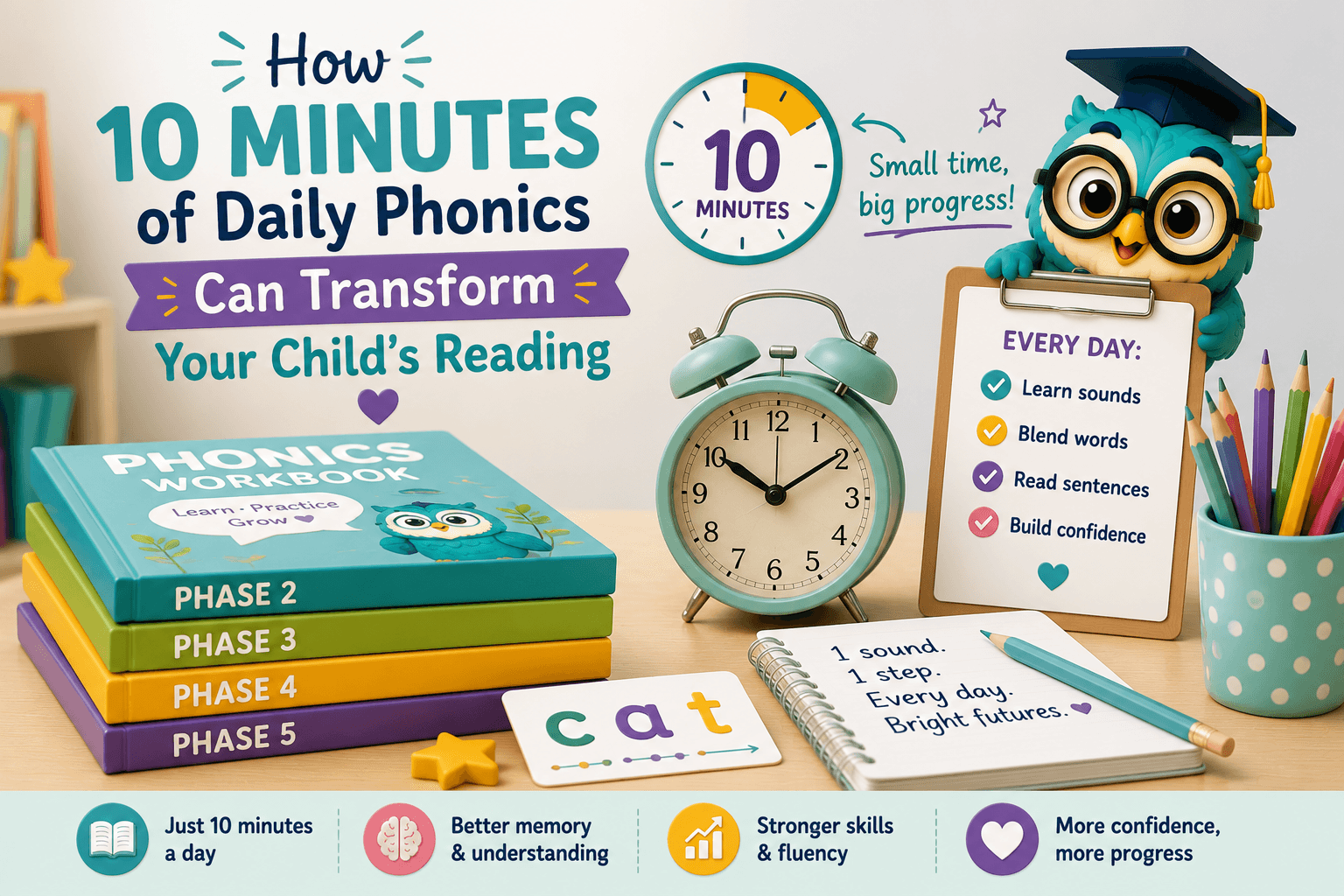
The reality is often much simpler. In fact, 10 minutes of focused phonics practice each day can have a remarkable impact on a child’s reading progress. Learning doesn’t happen because sessions are long. It happens because they are consistent. Small amounts of practice, repeated regularly, strengthen memory, build confidence and help children develop secure reading foundations that last a lifetime. If you’re worried you don’t have enough time, this article is for you.
Why Little and Often Works Best
Our brains are designed to learn through repetition. Rather than trying to absorb lots of new information in one sitting, children learn more effectively when they revisit skills regularly over time.
Think about learning to ride a bike. You wouldn’t expect a child to practise once for two hours and then never ride again. Reading works in much the same way. Frequent, manageable practice helps children:
remember sounds more easily
blend words more automatically
improve spelling
build reading fluency
develop confidence
Ten minutes each day soon adds up.
Over one week, that’s: 70 minutes of focused learning.
Over one month: Over 5 hours of phonics practice.
Over one year: More than 60 hours of structured learning.
Those small daily sessions make a big difference.
The Science Behind Daily Practice
Educational research consistently highlights the importance of retrieval practice and spaced repetition. Children remember information more effectively when they revisit it regularly rather than learning everything at once. Each time your child recalls:
a letter sound
a tricky word
a spelling pattern
the memory becomes stronger.
This means that daily practice isn’t simply about learning something new. It’s also about strengthening what has already been learned.
Why Long Sessions Can Be Less Effective
Many young children become tired after extended periods of concentrated learning. When children are tired, they are more likely to:
guess words
lose concentration
become frustrated
make avoidable mistakes
lose confidence
Stopping after ten positive minutes often leaves children feeling successful and willing to return tomorrow. It is far better to finish while your child is still engaged than to continue until they are exhausted.
What Can You Achieve in Just 10 Minutes?
Quite a lot. A simple session might include:
Minute 1–2
Review previously learned sounds.
Minute 3–4
Practise today’s focus sound.
Minute 5–6
Read words containing that sound.
Minute 7–8
Spell a few words.
Minute 9
Read one or two simple sentences.
Minute 10
Celebrate success and revisit one tricky word.
That’s all.
Short.
Focused.
Achievable.
Consistency Builds Confidence
Children become confident readers because they experience repeated success. Every correctly blended word tells the brain: “I can do this.” Those small moments gradually build a child’s belief in themselves. Confidence isn’t created overnight. It’s built one successful reading experience at a time.
What If My Child Needs Longer?
One of the biggest misconceptions in phonics is that children should move on to a new sound every day. That simply isn’t true. Some children are ready to progress quickly. Others benefit from spending:
several days
or even an entire week
consolidating one sound before moving on. And that’s absolutely fine. Learning isn’t a race. The goal is secure understanding, not speed.
It’s Better to Master One Sound Than Rush Through Five
Children often appear to know a sound after one lesson. But true mastery means they can:
✔ recognise it instantly
✔ read it in different words
✔ spell it accurately
✔ use it in sentences
✔ remember it weeks later
That takes practice. There’s no prize for finishing a workbook quickly. The real success comes when children feel confident using what they’ve learned.
Our Phonics Workbooks Are Designed to Be Flexible
At Quality First Education, we’ve intentionally designed our phonics workbooks to fit around real family life.
Unlike our live online lessons, where children usually move through the programme at a structured weekly pace, the workbooks allow you to adapt learning to your child.
You might choose to:
complete one activity each day
spend several days on one sound
revisit earlier pages whenever needed
pause and return later
The workbook moves at your child’s pace.
What You’ll Find in Each Workbook
Every workbook includes carefully structured activities such as:
letter sound practice
blending
segmenting
reading real words
tricky words
sentence reading
sentence writing
spelling
retrieval activities
parent guidance
Because each section builds on previous learning, families can confidently work through the programme knowing every activity supports long-term progress.
When Is a Live Programme the Better Option?
While many children thrive using workbooks at home, others benefit from additional teaching.
Our Live Online Phonics Programmes provide:
qualified teacher-led instruction
25-minute lessons
small groups (maximum 10 children)
interactive games
guided reading
spelling practice
sentence writing
regular encouragement
The live programme follows a carefully planned pace, with each lesson building on the previous one. It is ideal for children who:
enjoy learning with others
benefit from routine
need extra confidence
respond well to teacher guidance
Which Option Is Right for Your Child?
There isn’t one correct answer. Some families choose: Workbook only because they enjoy learning independently.
Others choose: Live programme for structured teaching which includes workbooks. Children attend the live lesson each week and then use the workbook throughout the week to consolidate their learning. This combination provides both expert teaching and plenty of opportunities for retrieval practice at home.
Progress Is Measured in Confidence, Not Speed
Parents sometimes worry because another child has “finished” a workbook more quickly. Please don’t. A workbook isn’t something to race through. It’s a tool for learning. If your child spends: one week on a single sound and truly understands it, that is often far more valuable than rushing ahead before the learning is secure. Children remember what they revisit. Not what they rush through.
Start With the Right Level
Before beginning any phonics programme, it’s important to know where your child is currently working. If activities are too easy, progress slows. If they are too difficult, confidence suffers.
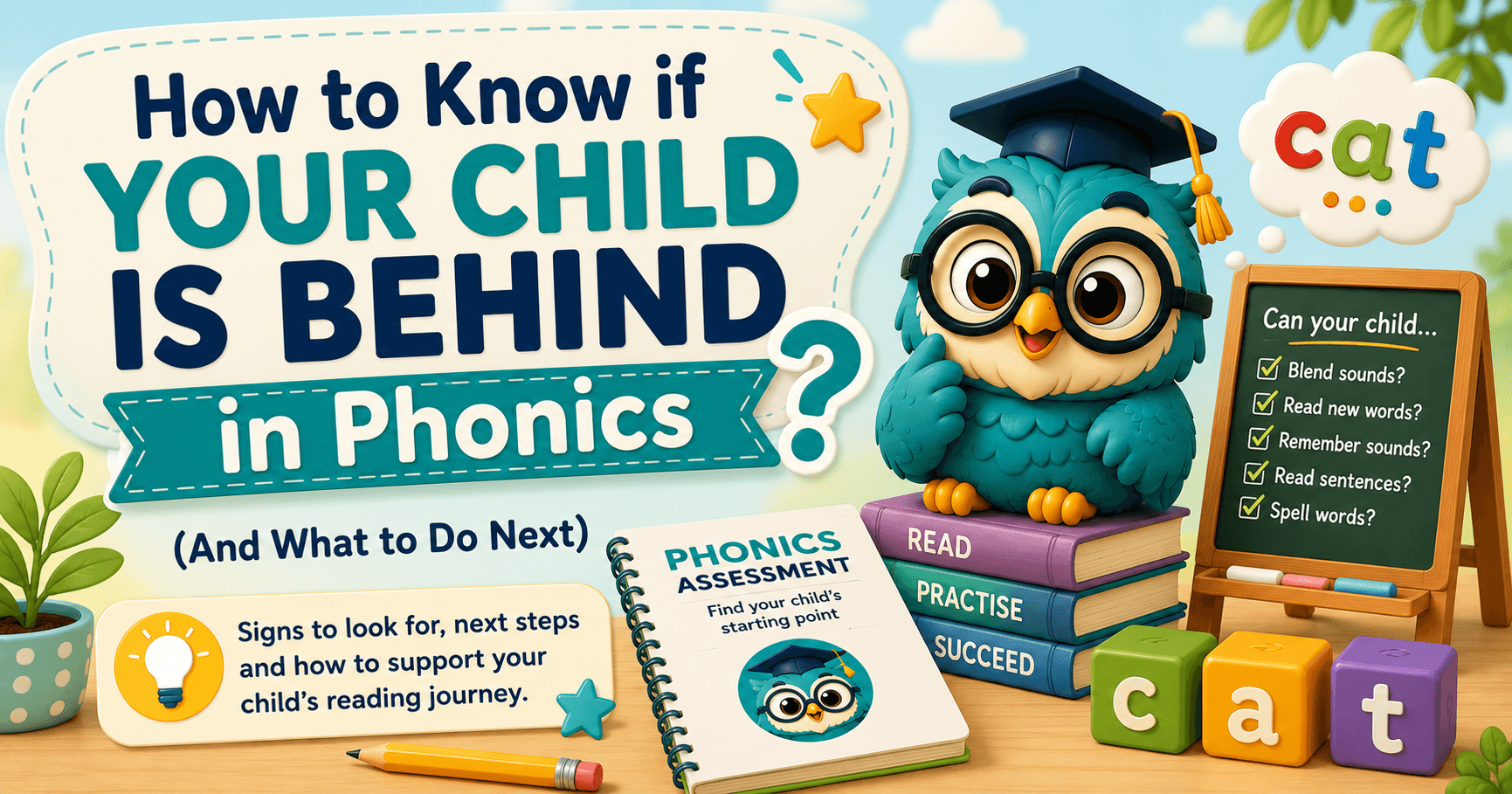
That’s why we recommend beginning with our QFE Phonics Assessment.
It helps identify:
your child’s current phonics phase
strengths
gaps
sounds to revisit
recommended next steps
Once you know your child’s starting point, choosing the right workbook or programme becomes much easier.
Helping your child become a confident reader doesn’t require hours of teaching every day. It requires consistency. Ten focused minutes. One sound at a time. One word at a time. One sentence at a time. Over weeks and months, those small moments become something much bigger.
Fluency.
Independence.
And eventually… A child who picks up a book and says, “I can read this.” There are few moments more rewarding than that.
Ready to Begin?
Download the QFE Phonics Assessment
Assess your child’s phonics skills at home, identify their current stage and discover exactly where to start.
Download the phonics assessment workbook
Explore Our Flexible Phonics Workbooks
Work through one activity a day—or one sound a week. Learn at the pace that’s right for your child.
Browse the phonics workbook collection
Join a Live Online Phonics Programme
Teacher-led, 25-minute lessons designed to build confident, independent readers.
Explore our live phonics programmes
Book a One-to-One Consultation
Receive personalised advice and recommendations based on your child’s individual needs.