Helping your child learn to read at home is one of the most valuable things you can do as a parent. Reading together, practising sounds, and celebrating every new word all help build confidence and a lifelong love of learning. However, phonics has changed considerably over the years, and many parents worry they might be teaching it incorrectly. You may have even found yourself wondering, "Am I helping, or am I making it harder?" The good news is that you don't need to be a teacher to support your child's reading. By understanding a few common mistakes, you can make home practice far more effective and enjoyable.
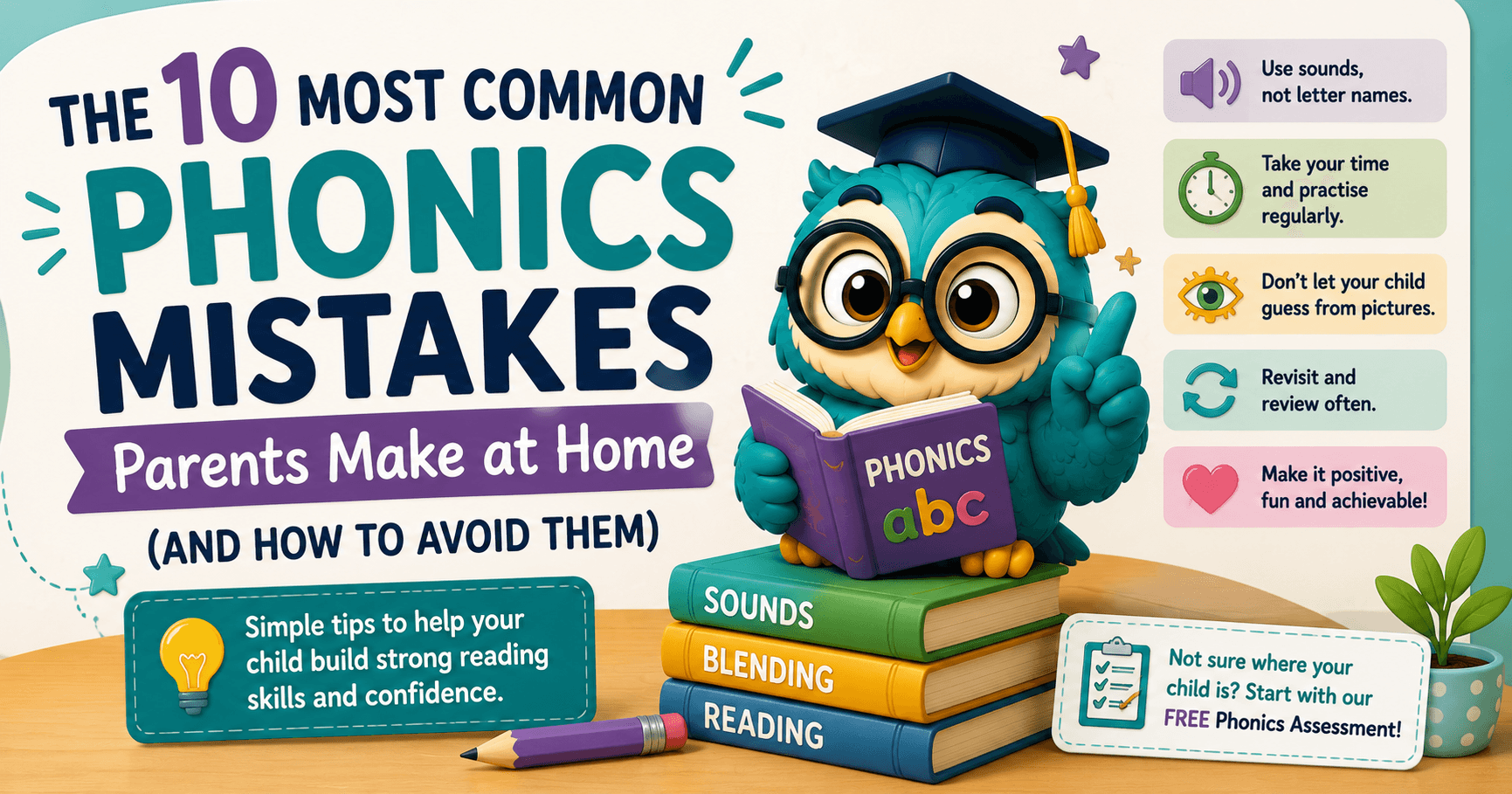
Here are the 10 most common phonics mistakes parents make—and what to do instead.
1. Using Letter Names Instead of Letter Sounds
One of the biggest misunderstandings is using letter names when children are learning to blend.
For example:
Instead of saying:
"See – Ay – Tee"
Children need to hear:
"/c/ – /a/ – /t/"
Using pure sounds makes blending much easier because children can hear the word forming naturally.
Try this instead
Whenever you're practising phonics, use the sound each letter represents rather than its alphabet name.
2. Adding Extra Sounds
Many adults naturally add an "uh" sound to the end of consonants. For example:
❌ "buh"
❌ "tuh"
❌ "muh"
Instead, children should hear the pure sounds:
✔ /b/
✔ /t/
✔ /m/
Adding extra vowel sounds makes blending much more difficult. Imagine trying to blend:
"buh-a-tuh"
instead of
"/b/ /a/ /t/"
The second is much easier for children to decode.
3. Moving On Too Quickly
Parents often assume that once a child recognises a sound, it's time to teach the next one. In reality, children need opportunities to:
recognise sounds quickly
blend them automatically
read them in words
spell them in writing
Secure learning is always better than rushed learning. Children build confidence through repetition.
4. Guessing Words From Pictures
Picture books are wonderful for developing vocabulary and a love of reading. However, during phonics practice, children should decode words rather than guess them. Some children learn to:
look at the picture
recognise the first letter
guess the rest
This may appear successful, but it doesn't build independent reading skills. Encourage your child to look carefully at every sound in the word before reading it.
5. Correcting Every Mistake Immediately
It's natural to want to help. But jumping in too quickly can prevent children from developing independence. Instead, allow thinking time. Ask questions such as:
"Can you try sounding it out?"
or
"Let's look at each sound together."
Giving children time to solve problems helps build confidence.
6. Reading for Too Long
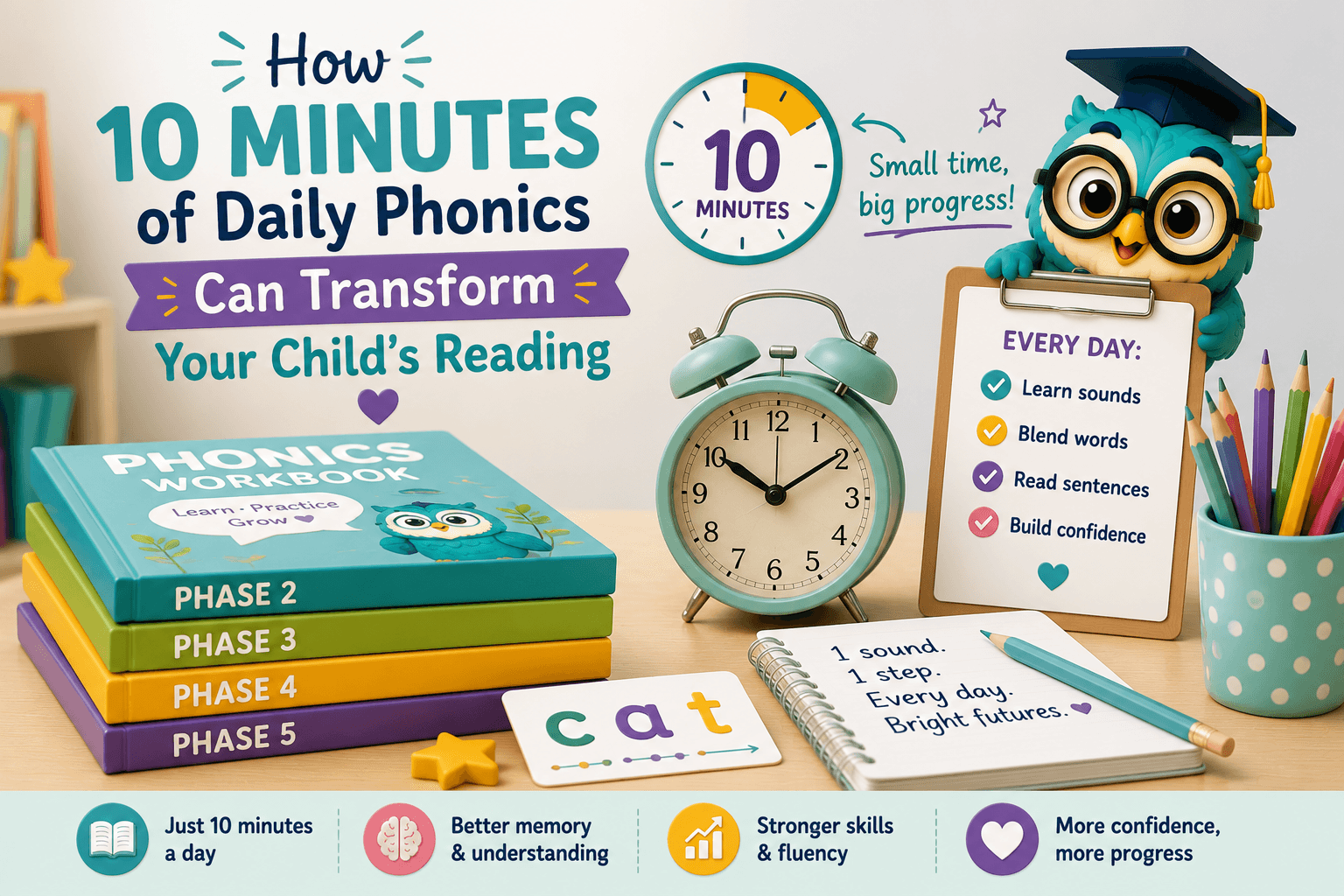
Young children learn best through short, regular practice. Ten focused minutes each day is often more effective than an hour once a week. When children become tired, learning becomes less efficient.
Keep sessions:
enjoyable
positive
achievable
Leave your child wanting to do more tomorrow.
7. Forgetting to Revisit Previous Sounds
Learning isn't simply about adding new knowledge. It's also about strengthening what has already been learned. Without regular retrieval, children naturally forget some sounds and spelling patterns. Include regular revision alongside new learning. For example:
Today's lesson:
one new sound
five previously learned sounds
This balance strengthens long-term memory.
8. Expecting Reading and Spelling to Develop at the Same Speed
Many parents become concerned when their child can read a word but cannot spell it. This is completely normal.
Reading involves: Seeing → Decoding
Spelling involves: Hearing → Segmenting → Remembering → Writing
Spelling places much greater demands on working memory. Children often become confident readers before becoming confident spellers.
9. Comparing Your Child to Others
Every child follows their own reading journey. Some children blend quickly. Others need more repetition. Some master Phase 3 rapidly but spend longer consolidating Phase 5. Comparison often creates unnecessary worry. Instead, compare your child with where they were a few months ago. Celebrate progress, not speed.
10. Thinking Phonics Is Just About Reading
Phonics supports much more than reading. Children also use phonics when they:
spell words
write sentences
recognise patterns
build fluency
develop confidence
The goal isn't simply reading individual words. It's helping children become confident, independent readers and writers.
What Should You Do Instead?
The most effective home phonics practice is:
✔ Short
✔ Consistent
✔ Enjoyable
✔ Structured
✔ Repetitive
✔ Confidence-building
Children do not need hours of practice. They need regular opportunities to revisit sounds, blend words and experience success.
Not Sure Where Your Child Is?
One of the biggest challenges for parents is knowing where to start. If you're unsure which phonics phase your child is currently working within, beginning with an assessment can save a great deal of guesswork.
Our FREE QFE Phonics Assessment helps you identify:
your child's current phonics stage
areas of strength
sounds to revisit
recommended next steps
Rather than wondering whether your child is "behind," you'll know exactly what they need to practise next.
Sign up to our newsletter to receive your free assessment
Looking for Structured Support?
Once you know your child's current stage, the next step is providing the right level of practice. Our QFE Phonics Workbooks are carefully structured to build confidence through:
letter sounds
blending
segmenting
tricky words
reading
spelling
sentence writing
retrieval practice
Each workbook follows a clear progression, making it easy for parents to support learning at home. If your child would benefit from more direct teaching, our Live Online Phonics Programmes provide small-group lessons led by a qualified primary teacher, helping children develop secure reading foundations in a supportive environment.
Supporting your child's reading doesn't require perfect teaching. It requires patience. Consistency. Encouragement. And an understanding that every child develops at their own pace. Small improvements made regularly often lead to remarkable progress over time.
Every sound mastered.
Every word blended.
Every sentence read.
Brings your child one step closer to becoming a confident, independent reader.
Ready to Take the Next Step?
Download the QFE Phonics Assessment
Assess your child’s phonics skills at home, identify their current stage and discover exactly where to start.
Download the phonics assessment workbook
Explore Our Structured Phonics Workbooks
Printable resources designed to help children practise with confidence at home.
Browse the Phonics Workbook Collection
Join a Live Online Phonics Programme
Teacher-led, small-group lessons designed to build secure reading foundations.