A common concern among home-educating families is how to evidence learning. Questions often arise such as:
How much evidence do I need?
Do I need formal assessments?
Should I keep every worksheet?
What happens if the local authority asks for information?
As discussions around home education registration and oversight continue to develop, these concerns have become even more common. For many parents, the word evidence immediately brings to mind folders full of paperwork, endless photographs, and detailed records that feel overwhelming to maintain. Fortunately, effective evidence does not have to look like school. Nor does it need to consume large amounts of your time. The goal is not to prove that your home education looks like a classroom. The goal is simply to demonstrate that meaningful learning is taking place.
Start With the Purpose of Evidence
Before collecting anything, it helps to understand why evidence may be useful. Evidence can:
demonstrate educational progress,
provide a record of learning,
help you reflect on what is working,
support transitions if circumstances change,
and help answer questions if information is requested.
Importantly, evidence is not only for local authorities. Many families find that maintaining simple records helps them recognise how much learning is actually happening. When learning occurs naturally throughout daily life, progress can sometimes be easy to overlook.
Learning Doesn’t Have to Look Like School
One of the biggest misconceptions is that evidence must consist of traditional schoolwork. Home education often includes learning through:
books,
conversations,
educational visits,
documentaries,
projects,
experiments,
hobbies,
volunteering,
cooking,
nature study,
and everyday life experiences.
All of these can contribute to a child’s education. Evidence should reflect your educational approach rather than forcing your approach to fit someone else’s expectations.
A Portfolio Is Often the Simplest Option
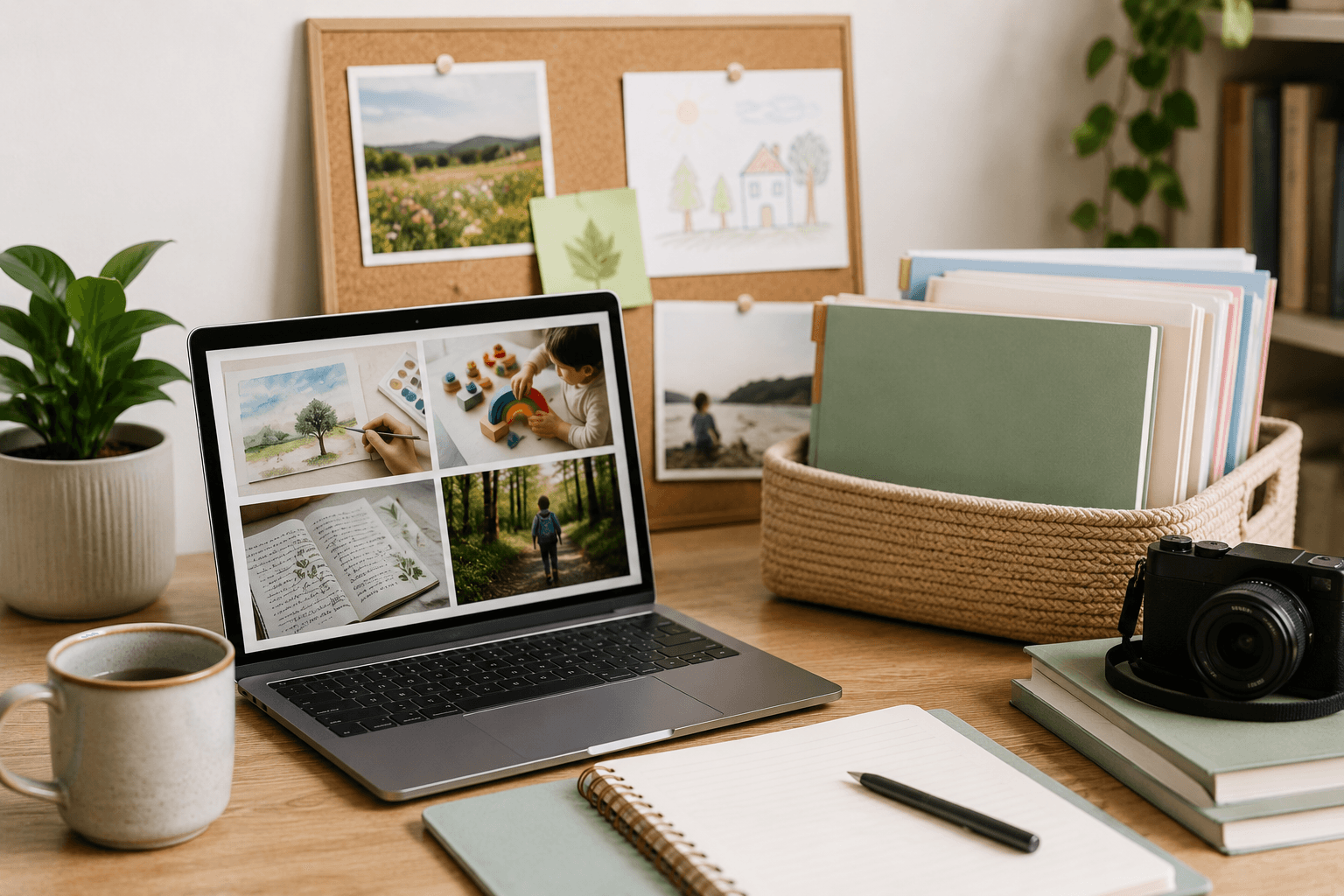
Many home educators choose to keep a portfolio. This does not need to be complicated. A portfolio might include:
writing samples,
artwork,
photographs,
science investigations,
reading lists,
project work,
certificates,
journals,
or examples of completed activities.
Think of it as a snapshot of learning rather than a complete record of everything your child has ever done. A few examples collected consistently over time often provide a much clearer picture than hundreds of pages gathered in a panic.
Photographs Can Capture Learning Quickly
Photographs are one of the easiest ways to document learning. A simple photograph can record:
a science experiment,
a museum visit,
a baking activity,
a gardening project,
a construction challenge,
or a nature walk.
Many families create digital albums organised by month or subject. Adding a short caption can make the learning even clearer.
For example:
“Investigated plant growth by comparing seedlings grown in different conditions.”
This takes only seconds but creates a useful record.
Keep a Simple Learning Journal
A learning journal can be surprisingly effective. This does not need to be written daily. Some families make a brief note once a week.
Examples might include:
This Week We:
learned about pollination,
visited a local museum,
completed fractions work,
read a chapter book together,
researched Ancient Egypt,
practised measuring and weighing during baking.
Over time, these entries build a rich picture of learning across multiple subjects.
Reading Records Are Valuable
Reading forms a significant part of many home education approaches. Keeping a simple list of books can demonstrate:
literacy development,
vocabulary exposure,
subject knowledge,
and reading habits.
You could record:
independent reading,
shared reading,
audiobooks,
non-fiction texts,
magazines,
and educational articles.
A reading record often provides evidence of learning across numerous areas simultaneously.
Don’t Feel Pressure to Assess Everything
Many families worry that evidence must involve tests or formal assessments. For most home educators, this is unnecessary. Learning can often be demonstrated through:
projects,
conversations,
practical application,
written work,
or creative outcomes.
The aim is to show learning, not constantly measure it. Some children thrive under formal assessment. Others do not. Your evidence should reflect your child’s educational journey.
Focus on Progress Rather Than Perfection
One of the most useful things evidence can show is progress over time. A piece of writing from six months ago compared with a recent piece often tells a powerful story. The same applies to:
artwork,
maths work,
reading ability,
projects,
and practical skills.
Progress is often more meaningful than perfection. Children do not need to be working at an identical pace to school-based peers to demonstrate educational development.
Digital Systems Can Reduce Stress
Many families now keep digital portfolios. This can be as simple as:
a folder on your computer,
cloud storage,
a private blog,
digital photo albums,
or note-taking apps.
Benefits include:
easy organisation,
reduced paper storage,
quick searching,
and the ability to access records when needed.
The best system is usually the one you can maintain consistently.
Evidence Should Support Learning, Not Control It
Perhaps the most important thing to remember is this:
Evidence should support your home education journey.
It should not become the focus of it. Children learn best when they are engaged, curious, and able to explore meaningful experiences. If recording learning begins consuming more time than learning itself, it may be worth simplifying your approach. The goal is not to create a perfect portfolio. The goal is to create a realistic record that reflects your child’s education.
As home education legislation continues to evolve, many families are understandably paying closer attention to record-keeping and educational evidence. However, evidencing learning does not need to involve complicated systems or endless paperwork. A combination of:
photographs,
reading records,
project work,
learning journals,
and portfolio samples
can often provide a clear and authentic picture of a child’s educational journey. Home education is not about recreating school at home. And the evidence you keep does not need to look like school either. What matters most is that learning is taking place, progress is being made, and children are being supported to grow, develop, and thrive in ways that suit their individual needs.