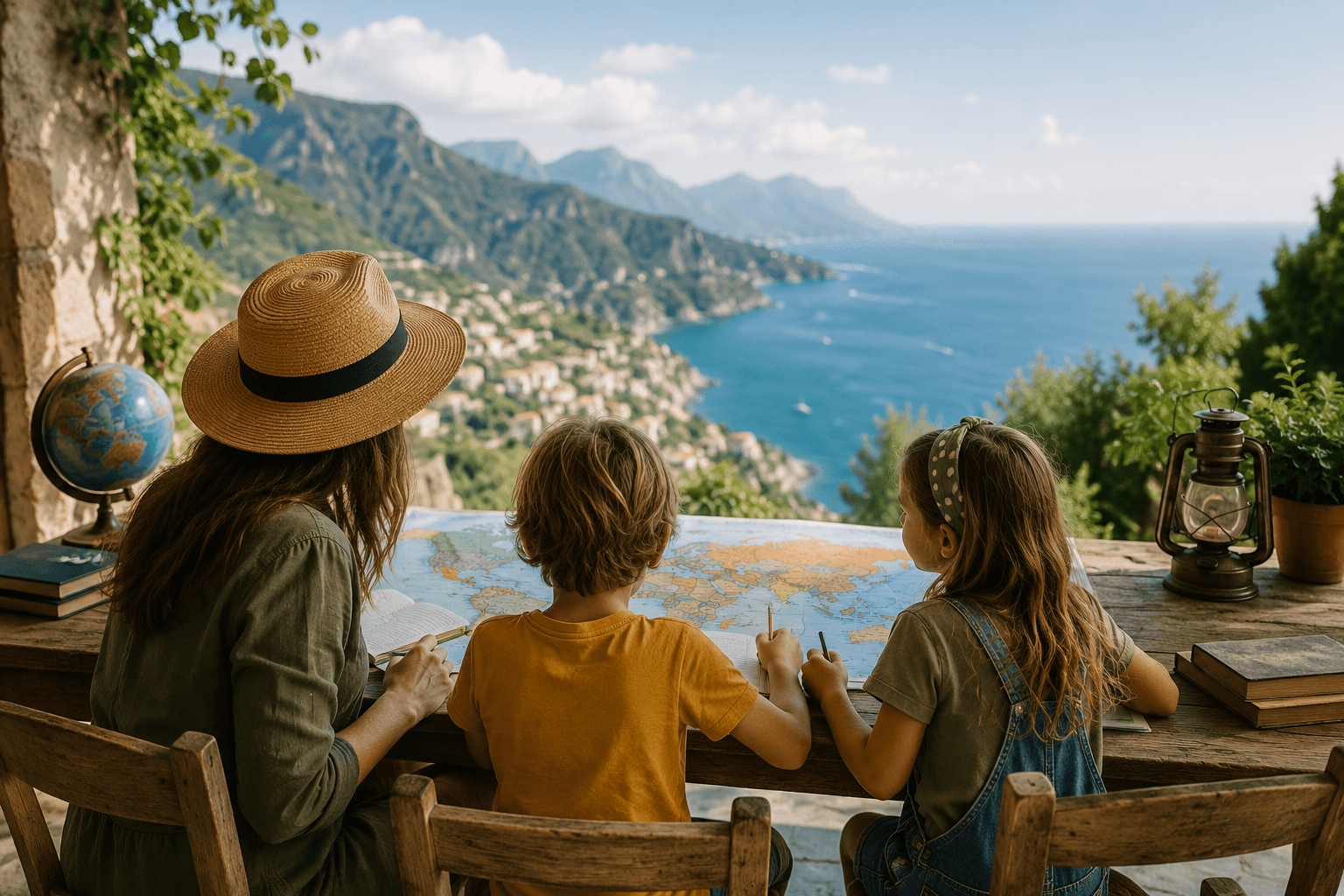
Education has traditionally been tied to a place.
A classroom.
A timetable.
A school building.
Yet an increasing number of families are choosing a different approach. Rather than bringing children to education, they are bringing education into the world itself. This approach, often called world schooling, combines travel, cultural immersion, and real-world experiences with home education. While worldschooling is not a new concept, advances in technology, remote work, online learning, and global connectivity have made it more accessible than ever before. In 2026, world schooling is attracting growing interest from families who want flexibility, meaningful experiences, and opportunities to learn beyond traditional educational environments.
But what exactly is world schooling?
What does the research tell us?
And how do families make it work in practice?
What Is World schooling?
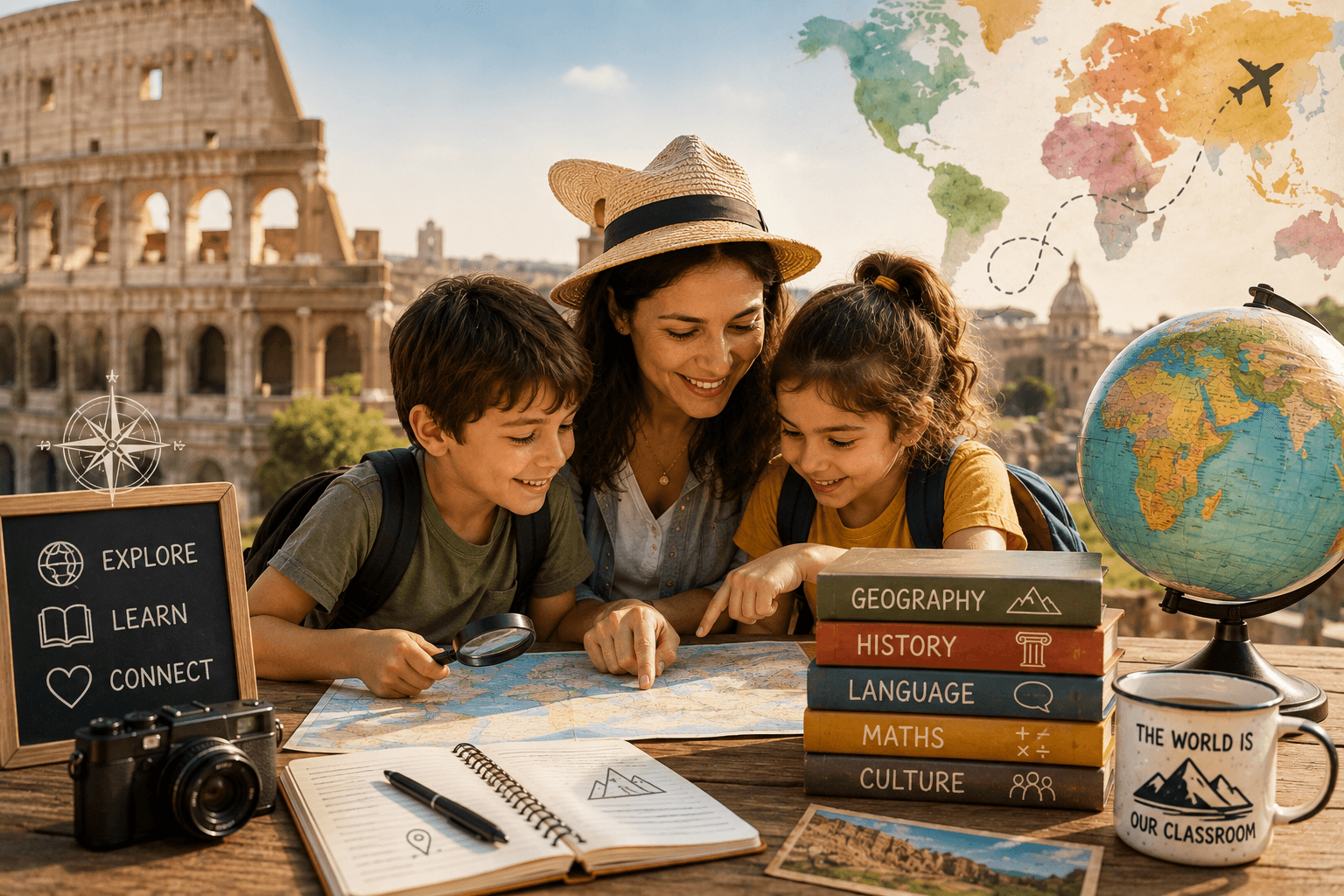
World schooling is an educational approach that uses travel, culture, and real-world experiences as central components of learning Unlike traditional schooling, where learning is often separated into subjects and classrooms, world schooling encourages children to learn through direct experiences. For example:
A visit to Italy may become a lesson in:
history,
art,
geography,
language,
architecture,
and culture.
A trip through Southeast Asia may spark learning about:
ecosystems,
economics,
religion,
biodiversity,
and global citizenship.
Learning becomes integrated with everyday life.
The world itself becomes the classroom.
Why Is World schooling Growing?
Several factors have contributed to the rise of world schooling.
1. Remote Work
More parents now work remotely than ever before. This has created opportunities for families to travel while maintaining income. For some families, worldschooling has become possible because work is no longer tied to a specific location.
2. Increased Awareness of Alternative Education
Home education, online learning, and flexible educational pathways have become more widely recognised. Many families now realise that education does not need to follow a single model. This growing awareness has encouraged exploration of approaches such as world schooling.
3. A Desire for Real-World Learning
Many parents are seeking educational experiences that feel more meaningful and connected. Rather than learning about the world through textbooks alone, children can experience it directly. This often leads to deeper engagement and stronger motivation.
What Does the Research Say?
Research specifically focused on world schooling remains relatively limited. However, there is substantial research on several related areas:
experiential learning,
cultural immersion,
educational travel,
outdoor learning,
project-based learning,
and self-directed education.
Across these areas, several themes emerge consistently.
Experiential Learning Improves Retention
Educational research has long suggested that people remember experiences more effectively than isolated facts.
When children:
visit historical sites,
interact with different cultures,
participate in projects,
and apply knowledge in real contexts,
learning often becomes more memorable. Experiences create emotional connections that strengthen understanding and recall.
Cultural Exposure Develops Global Awareness
Children who experience different cultures often develop:
empathy,
adaptability,
cultural understanding,
communication skills,
and global awareness.
These experiences can help children understand perspectives beyond their own immediate environment. In an increasingly interconnected world, these skills are becoming increasingly valuable.
Motivation Often Increases
Many worldschooling families report that children become more engaged when learning feels connected to real life. A lesson on volcanoes becomes more meaningful when standing beside one. History often becomes more memorable when exploring ancient sites. Language learning becomes more relevant when communicating with local communities. This does not mean all learning becomes effortless, but relevance often increases motivation.
What Are World schooling Families Actually Doing?
One common misconception is that worldschooling means permanent travel. In reality, families approach it in many different ways. Some travel continuously. Others travel for:
several months each year,
seasonal periods,
or shorter educational trips.
Some families maintain a home base while using travel as an educational extension. Others adopt fully location-independent lifestyles. There is no single world schooling model.
How Learning Typically Happens
Most world schooling families use a blend of approaches. These may include:
Structured Learning
online programmes,
workbooks,
tutoring,
literacy practice,
mathematics programmes.
Real-World Learning
museums,
cultural sites,
nature experiences,
local communities,
language immersion,
volunteering.
Child-Led Learning
personal interests,
projects,
independent research,
creative exploration.
Successful world schooling often involves balancing freedom with educational consistency.
The Challenges of World schooling
Worldschooling can be incredibly rewarding. However, it is not without challenges. Common difficulties include:
maintaining routines,
balancing travel with academics,
budgeting,
internet access,
educational record-keeping,
and managing logistics.
Travel can also be tiring.
Children still need:
rest,
stability,
downtime,
and opportunities to process experiences.
World schooling is not simply an extended holiday. Like any educational approach, it requires planning and adaptation.
How to Make Worldschooling Work
Families who world school successfully often focus on a few key principles.
1. Prioritise Literacy and Numeracy
While travel offers rich educational opportunities, strong foundations remain important.
Most families maintain regular practice in:
reading,
writing,
mathematics,
and communication skills.
These foundations help children access learning across all subjects.
2. Focus on Depth Rather Than Quantity
Trying to turn every experience into a lesson can become exhausting. Instead, many successful worldschoolers focus on meaningful exploration.
A single museum visit may generate:
discussions,
reading,
creative projects,
and further research.
Learning often becomes deeper when families slow down.
3. Keep Some Structure
World schooling does not require rigid schedules. However, many children benefit from predictable routines.
This might include:
daily reading,
maths practice,
journaling,
project work,
or reflection activities.
Structure provides stability amid constant change.
4. Document Learning Simply
Families often keep:
travel journals,
photographs,
portfolios,
project records,
reading lists,
and learning reflections.
These records can help capture educational experiences without creating unnecessary stress.
Is World schooling Right for Every Family?
Not necessarily. World schooling requires:
flexibility,
planning,
financial resources,
and a willingness to embrace uncertainty.
Some children thrive on constant new experiences. Others need greater stability and predictability. The most successful approaches are usually those built around the needs of the individual family rather than an idealised vision of travel.
As technology (particularly AI) continues to reshape work and education, worldschooling is likely to remain an increasingly visible educational pathway. Research into experiential learning, cultural immersion, and self-directed education suggests that meaningful real-world experiences can play a powerful role in children’s development. At the same time, successful worldschooling is rarely about travelling constantly. It is about creating opportunities for children to engage with the world in ways that deepen understanding, build curiosity, and connect learning to life itself. Because ultimately, worldschooling is not really about travel. It is about recognising that education can happen far beyond the walls of a classroom. And sometimes, the most memorable lessons are the ones experienced rather than simply taught.