Some children's stories disappear almost as quickly as the final page is turned. Others stay with us for decades. We remember the characters. We repeat the funny phrases. We picture the settings. We remember how the story made us feel even when we can no longer remember every detail of the plot.
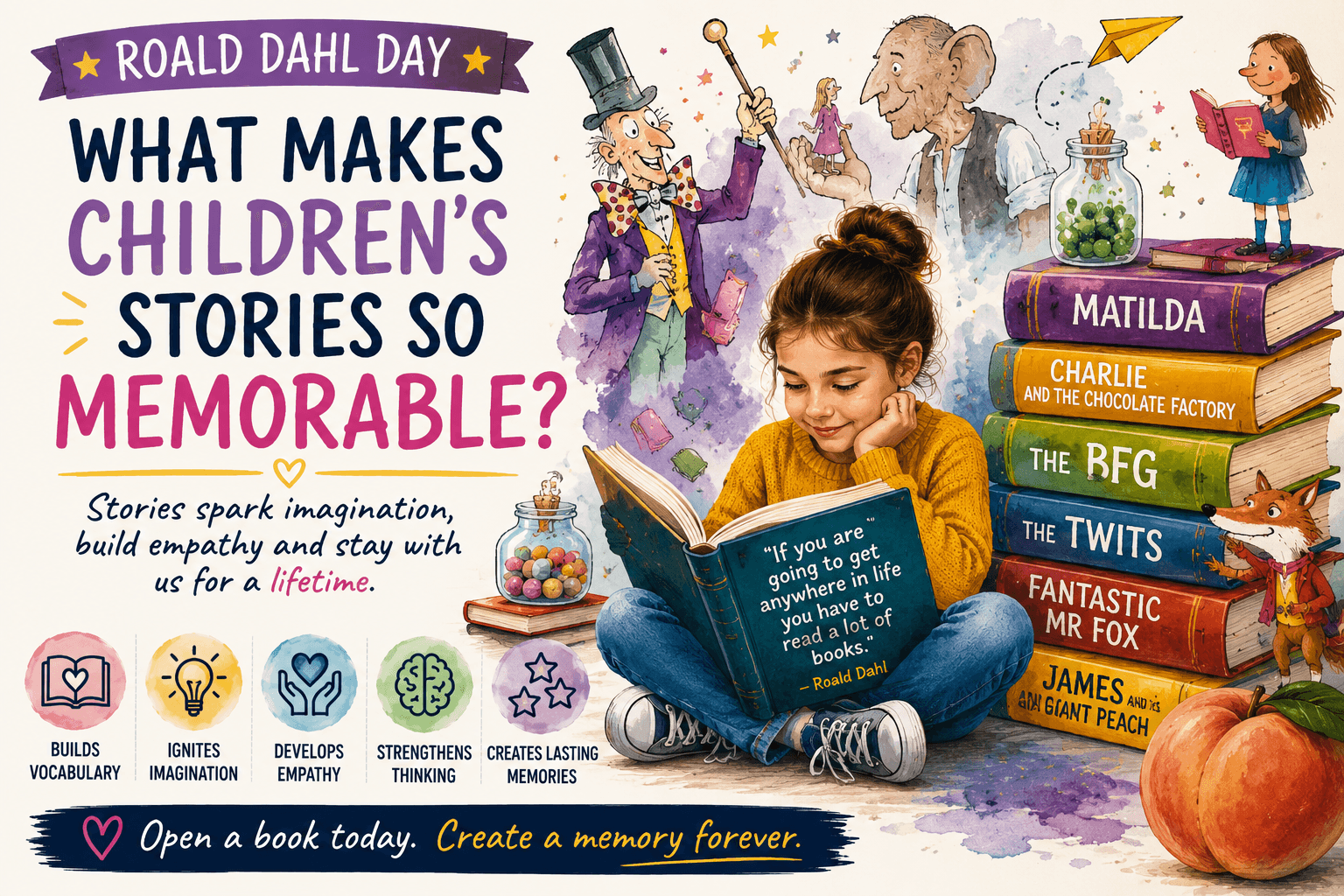
The books of Roald Dahl provide an interesting example. Generations of readers have encountered enormous peaches, eccentric chocolate factories, terrifying headmistresses, clever foxes, friendly giants and children discovering that they may be far more capable than the adults around them realise. Roald Dahl Day, marked each year on 13 September, gives us an opportunity to celebrate children's literature. But it also raises a fascinating educational question:
What actually makes a story memorable to a child?
The answer goes far beyond an exciting plot. Stories bring together emotion, imagination, language, prediction, knowledge, humour, repetition and human connection. When children become absorbed in a story, their brains are doing far more than simply decoding words on a page. Understanding this can help parents and educators think differently about the role stories play in children's learning—and why reading for pleasure deserves a place alongside the explicit teaching of reading.
Children Need to Learn to Read and Have Reasons to Want to Read
When we discuss early reading, it is easy to concentrate on mechanics.
Can the child recognise this grapheme?
Can they blend these sounds?
Can they read this sentence?
Can they recognise this tricky word?
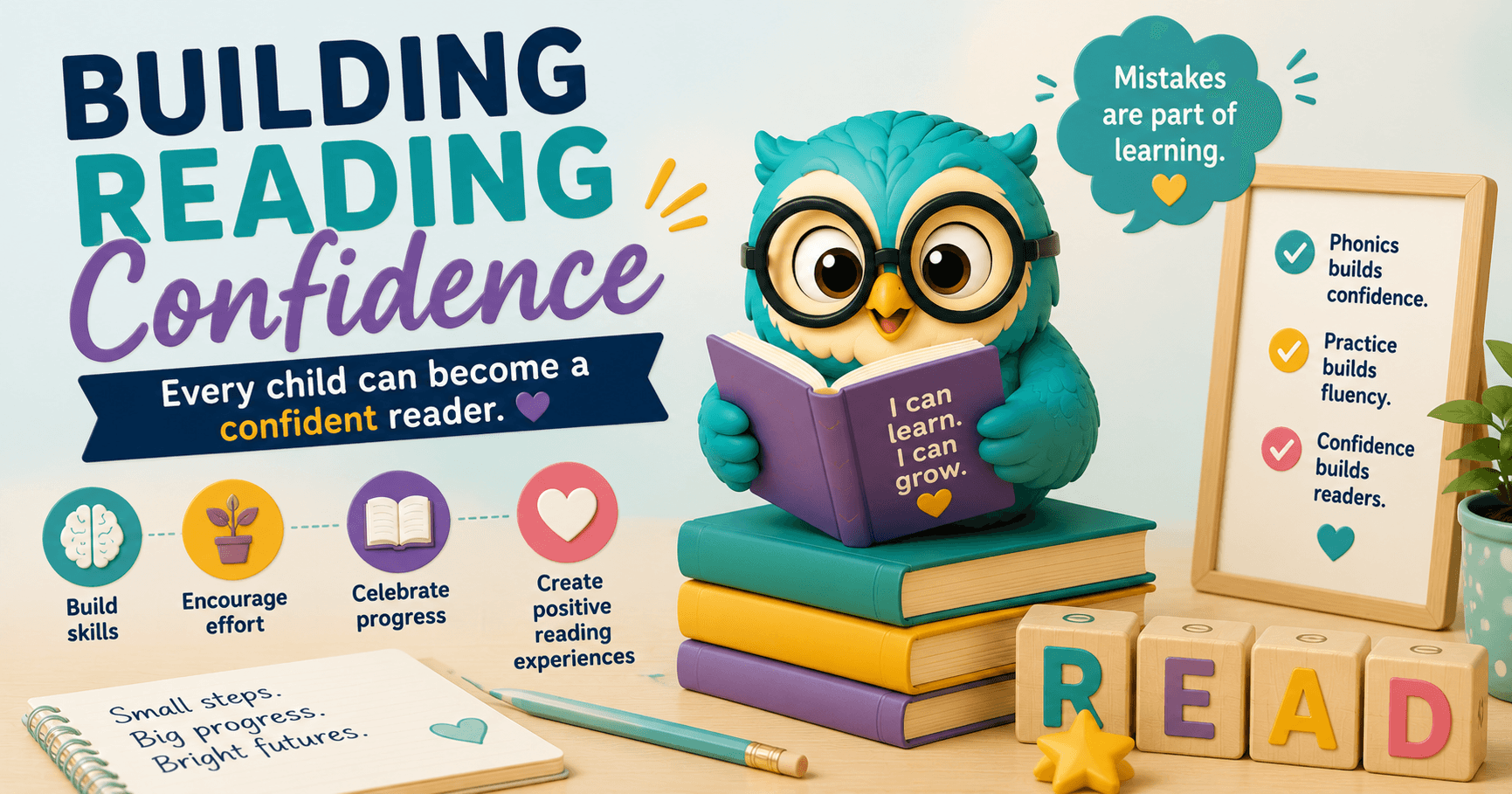
These skills matter enormously. Children need a secure understanding of how our written language works. But there are really two important journeys happening. Children are learning how to read, while also developing their understanding of why reading might be worth doing. A child needs the skills required to access written language, but we also want them to discover that books can make them laugh, wonder, question, imagine and learn. This is why explicit reading instruction and rich children's literature should not be treated as competitors. Phonics gives children increasing independence with the written word. Stories give them somewhere wonderful to use it.
What Makes a Story Stick in Our Memory?
Memory is not a perfect recording system. Our brains do not store every experience with equal strength. Some information is quickly forgotten, while other experiences remain accessible for years. Several things can make information particularly memorable, including:
emotional significance,
prior knowledge,
attention,
meaningful connections,
novelty,
repeated retrieval,
and opportunities to think deeply about an idea.
Good stories naturally contain many of these ingredients.
A memorable character creates emotion.
A surprising event captures attention.
A repeated phrase creates familiarity.
A mystery encourages prediction.
An unusual setting stimulates imagination.
A conversation after reading encourages retrieval.
This means stories can provide extremely rich conditions for learning.
1. Memorable Stories Make Children Feel Something
Think about a book you loved as a child. You may not remember every sentence. But you might remember feeling frightened, excited, comforted, disgusted, amused or completely fascinated. Emotion and memory are closely connected. When something matters to us emotionally, we are more likely to pay attention to it and attention is an important part of forming memories. Children's authors understand this intuitively. They create characters children desperately want to succeed. They create villains children dislike. They introduce danger, unfairness, humour, friendship and surprise.
In Matilda, for example, the emotional power does not simply come from a clever child. Children encounter unfairness, loneliness, courage, friendship and the satisfying idea that an underestimated child might ultimately have extraordinary power. That emotional investment helps transform a sequence of events into a story children care about.
2. Great Characters Give Children Something to Remember
Memorable children's stories often contain characters with distinctive characteristics. Think about the difference between: There was a teacher who was quite unkind and a character so exaggerated, unpredictable and intimidating that children can immediately picture them. Characters become easier to remember when they have recognisable: personalities, motivations, behaviours, voices, appearances and problems.
Children begin building mental models of those characters. They know what the character usually does. They predict how the character might react. They notice when the character behaves unexpectedly. This is valuable for comprehension. Understanding a story is not simply remembering what happened. Children need to understand who is doing what, why they might be doing it and how events connect.
Characters give children something around which those ideas can be organised.
3. Children's Stories Often Use the Unexpected
Children are surrounded by familiar patterns. Stories can break them.
A giant peach is more memorable than an ordinary peach.
A chocolate factory filled with extraordinary inventions is more memorable than an ordinary factory.
A giant collecting dreams is more memorable than someone simply going to sleep.
Novelty captures attention. But successful children's stories usually do more than introduce random unusual things. They combine the familiar with the extraordinary.
Children know what chocolate is. Then a story asks: What if there were an entire magical factory devoted to it?
Children know what dreams are. Then: What if somebody collected them?
Children know peaches. Then: What if one became enormous?
This combination gives children an existing piece of knowledge to attach the imaginative idea to because new information is easier to understand when it can connect with something we already know.
4. Imagination Makes Children Active Participants
When children listen to a story without pictures—or eventually read increasingly complex novels they must construct much of the world themselves.
What does the room look like?
How large is the giant?
What does the chocolate factory smell like?
How does the character sound?
A book provides information, but the reader creates a mental representation from it. This is one of the remarkable features of reading. Children are not simply receiving a finished visual experience. They are actively constructing meaning from language. Two children can read exactly the same description and imagine slightly different worlds. That mental participation can make reading deeply engaging.
5. Prediction Keeps the Brain Involved
Good stories make children wonder: What happens next?
That question is more educationally valuable than it might first appear. Prediction requires children to combine:
what has already happened + what they know about the characters + their existing knowledge + clues within the text.
They form an expectation. Then they keep reading to discover whether they were correct. When the prediction is wrong, they update their understanding. Parents can encourage this naturally without turning every bedtime story into a comprehension lesson. Simply pause occasionally and ask: "What do you think is going to happen?" Then: "What made you think that?"
The second question is particularly powerful because it encourages children to explain their reasoning.
6. Humour Is Powerful
Children's books are allowed to be silly. Absurd situations, exaggerated characters, surprising language, disgusting descriptions and playful words can create enormous enjoyment. Humour captures attention and creates emotional responses. It also makes reading social. A child laughs, the adult laughs, they repeat the funny part and the they tell someone else about it later. Without realising it, they have revisited and retrieved the story several times. Humour can therefore contribute to memorability while also helping children associate books with enjoyment rather than simply academic performance.
7. Unusual Language Makes Stories Distinctive
One of the most recognisable features of Dahl's writing is his playful treatment of language. His stories include invented words, unusual expressions, exaggeration, rhyme and unexpected combinations of language. Children often love this because it demonstrates something important: language can be played with.
Words are not only things children have to spell correctly on worksheets. They can be manipulated, combined, invented, compared and enjoyed. This can lead to conversations about morphology, meaning and vocabulary. Ask a child what they think an invented word might mean.
What clues helped them?
What does it sound like?
Can they invent their own word?
What would it describe?
Now vocabulary development becomes creative.
8. Stories Introduce Children to Richer Vocabulary
Children's literature can expose young readers to language beyond ordinary conversation. A child might encounter words describing:
emotions,
movement,
appearance,
personality,
settings,
objects,
historical periods,
imaginary worlds,
and ideas.
Sometimes children infer meanings from context. Sometimes they need an explanation. Sometimes they encounter the same word repeatedly across different books until it becomes familiar. This gradual accumulation of vocabulary matters because vocabulary contributes significantly to reading comprehension. A child can decode a word perfectly without knowing what it means. Strong reading therefore requires both word-reading ability and language comprehension. Stories provide an important environment in which those two worlds eventually meet.
9. Background Knowledge Makes Stories Easier to Understand
Children bring their existing knowledge to everything they read. Suppose a story mentions:
The knight lowered his visor before entering the tournament.
A child who knows about castles, armour, knights and medieval tournaments can construct meaning quickly. A child unfamiliar with those concepts may decode every word correctly while understanding much less.
This demonstrates something important about reading comprehension: Knowledge is important. Books build knowledge, but existing knowledge also helps children understand books. This creates a powerful cycle.
Knowledge helps reading → reading builds knowledge → greater knowledge supports future reading.
That is one reason reading widely across fiction and non-fiction can be so valuable.
10. Repetition Strengthens Memory
Young children frequently ask for the same story again. And again. And again. For adults, the tenth reading may feel somewhat less exciting. For children, repetition can be valuable. They begin anticipating language. They remember what comes next. They notice details they missed previously. They become increasingly familiar with vocabulary and sentence structures. They may eventually join in with repeated phrases. From a learning perspective, familiarity reduces some of the cognitive demands of understanding the basic storyline, potentially allowing children to notice other features. Repetition is not necessarily a sign that children need something more challenging. Sometimes revisiting familiar material is exactly how learning becomes secure.
11. Stories Give Children Safe Ways to Explore Difficult Ideas
Children's literature can explore enormous subjects within the safety of an imagined world; fairness, loss, courage, jealousy, friendship, bullying, family, difference, power, fear, Right and wrong. A child may find it difficult to discuss an issue directly. Talking about a character can be easier. Instead of asking: "What would you do if somebody treated you unfairly?" you can ask: "Do you think what happened to that character was fair?" The story creates some emotional distance. Children can examine choices and consequences without the conversation necessarily being about themselves.
12. Stories Help Children Understand Other Perspectives
Reading also gives children access to minds beyond their own. A story can show that two characters interpret the same situation differently. One might be frightened. Another excited. Another angry. Children begin thinking about motivations, beliefs, intentions and feelings.
Why did she do that?
Did he know what would happen?
Why is that character upset?
Was the villain always like this?
This kind of discussion encourages perspective-taking. It reminds children that people do not always know, believe or feel the same things they do.
13. Shared Reading Builds Connection
The educational value of a book is not limited to the words printed inside it. There is also what happens around the book. A child climbs beside a parent. Someone does a ridiculous character voice. They laugh. They stop to talk about an illustration. The child asks a question. One story reminds the adult of another. A ten-minute reading experience becomes conversation, language, knowledge and relationship. Children learn through social interaction. Shared reading creates a natural environment for rich language without requiring every conversation to become a formal lesson.
14. Reading Aloud Matters Even After Children Can Read
Once children learn to read independently, adults sometimes assume reading aloud should stop. It doesn't need to. A child's listening comprehension can exceed the complexity of the books they can decode independently. A developing reader might independently manage a relatively simple decodable text while being capable of understanding a far richer story when an adult reads it aloud. Reading aloud therefore gives children access to: more sophisticated vocabulary, longer narratives, complex characters and ideas beyond their independent reading level. Independent reading and shared reading serve different purposes. Children can benefit from both.
15. Memorable Stories Create Readers Who Want Another Story
We teach children phonics because we want them to become independent readers. We teach decoding because we want the marks on a page to become meaningful language. We practise fluency because we want reading to become increasingly effortless. But ultimately, we want children to discover what all of those skills give them access to; stories, information, ideas, humour, history, science, adventure, other people's experiences and entire imaginary worlds.
What Can Parents Learn From Memorable Children's Books?
You do not need to analyse every story your child reads. In fact, constantly questioning children can quickly remove some of the pleasure. Instead, build small conversations naturally around books. You might ask:
Who was your favourite character?
Which part made you laugh?
Was anything surprising?
What do you think will happen next?
Why do you think the character did that?
Was there a word you hadn't heard before?
Would you have made the same choice?
Sometimes don't ask anything. Simply read. Enjoying a book together is valuable in itself.
A Roald Dahl-Inspired Learning Activity
Roald Dahl Day can also become an opportunity for creative literacy. Invite your child to invent an extraordinary story ingredient. Start with something ordinary:
a school
a sweet
a suitcase
a tree
a lift
a grandmother
a pet
a library
Then change one thing.
What if the library only appeared at midnight?
What if the suitcase could travel anywhere?
What if the tree grew books instead of fruit?
What if your pet could speak for one hour every year?
Then ask:
Who is the main character?
What do they want?
What goes wrong?
Who helps them?
How does the problem get solved?
Younger children can tell the story aloud while an adult records their ideas. Older children can plan and write it independently. The aim is not to imitate another author's writing. It is to notice how ordinary ideas can become extraordinary stories.
What Roald Dahl Day Can Remind Us About Reading
Roald Dahl Day is an opportunity to celebrate one particular author's contribution to children's literature. But the bigger lesson applies far beyond one writer. Children need access to many kinds of books; funny books, serious books, adventure stories, poetry, traditional tales, mysteries and non-fiction. Books about children whose lives resemble theirs. Books that introduce lives completely different from theirs. Old favourites. New authors. Stories from different countries and cultures. The broader the reading diet, the more opportunities children have to encounter different language, knowledge, perspectives and ideas. No single author needs to define a child's experience of literature. The goal is a rich reading life.
What makes a children's story memorable? There probably isn't one ingredient. It is the strange mixture of:
emotion and imagination,
language and humour,
characters and conflict,
knowledge and novelty,
prediction and surprise,
repetition and conversation.
Children remember stories because stories give information meaning. They turn words into worlds. And this is an important reminder when we teach children to read. We want them to reach the point where a book is no longer primarily an exercise in decoding.
It becomes a doorway.
A doorway into another person's mind.
Another place.
Another time.
Another possibility.
So this Roald Dahl Day, celebrate the stories children remember. But also make room for the hundreds of stories they have yet to discover. Because sometimes the book a child remembers for the rest of their life is simply the next one they open.