
A child may be able to recognise sounds, blend words and read simple sentences, yet still avoid picking up a book. They may whisper when reading aloud, look to an adult for reassurance after every word or immediately say: “I can’t do it.”
This can be confusing for parents. If a child has the skills to read, why do they still seem so unsure? The answer is that reading ability and reading confidence are not the same thing.
A child can know how to decode words while still worrying about making mistakes, reading too slowly or being compared with others. Reading confidence develops gradually through successful experiences, emotional safety and the right level of support.
Understanding this difference can help parents respond with patience and provide the conditions children need to become confident, independent readers.
What Does Reading Confidence Look Like?
A confident reader does not necessarily read every word perfectly. Instead, they are usually willing to:
attempt unfamiliar words
use phonics strategies independently
continue after making a mistake
ask for help when needed
read aloud without becoming overwhelmed
choose books for enjoyment
believe that they can improve
Confidence is not the absence of mistakes. It is the belief that mistakes can be managed.
Signs a Child Can Read but Lacks Confidence
A child may have reasonable reading skills but still need confidence support if they:
avoid reading aloud
speak very quietly when reading
frequently ask, “Is that right?”
stop immediately after making a mistake
guess rather than attempt to decode
choose books that are much easier than their ability
become upset when faced with unfamiliar words
compare themselves negatively with other children
insist that they are “bad at reading”
rely heavily on an adult to confirm every answer
These behaviours do not necessarily mean the child cannot read.
They may mean that reading feels risky.
Why Reading Confidence Matters
Confidence influences how willing a child is to practise. A child who believes they can succeed is more likely to:
attempt difficult words
persist when reading becomes challenging
apply phonics strategies
read more frequently
recover from mistakes
participate in lessons
A child who expects to fail may avoid the very practice that would help them improve. This can create a cycle:
Reading feels difficult
↓
The child avoids reading
↓
They receive less practice
↓
Reading remains effortful
↓
Confidence decreases further
Breaking this cycle requires both skill development and emotional support.
Why Some Children Lack Reading Confidence
There is rarely one single cause. Often, several experiences contribute.
1. Reading Still Requires a Lot of Effort
A child may technically be able to decode words, but each word still requires intense concentration.
They must:
recognise the graphemes
recall the sounds
blend them together
remember the beginning of the sentence
think about meaning
When reading places heavy demands on working memory, children may appear hesitant even when their phonics knowledge is developing appropriately. Confidence often increases as decoding becomes more automatic.
2. They Have Experienced Repeated Difficulty
Children remember how learning makes them feel. If reading has regularly involved frustration, correction or comparison, they may begin approaching books with anxiety. Even after their skills improve, their expectations may remain negative. They may think:
“Reading is hard for me.”
“I always get it wrong.”
“Everyone else is better.”
Children often need new, positive reading experiences before those beliefs begin to change.
3. The Books Are Too Difficult
If a book contains too many unfamiliar sounds or words, children may struggle on every line. This makes it difficult to build fluency or enjoyment. A suitable reading book should provide enough challenge for learning while still allowing the child to experience success. When almost every sentence feels difficult, confidence can fall quickly.
4. They Are Afraid of Making Mistakes
Some children believe that good readers never make errors. As a result, they may:
avoid attempting words
wait for an adult to answer
become upset by corrections
choose only very familiar texts
Children need to understand that mistakes are a normal part of becoming a reader. The goal is not immediate perfection. The goal is using strategies, learning and improving.
5. They Have Been Compared With Others
Children quickly notice who reads faster, who has moved to a different book band or who receives praise. Even well-intentioned comparisons can make a child feel behind.
Comments such as: “Your sister was reading this at your age.” or “Everyone else can do this.” may increase anxiety rather than motivation.
Children develop confidence when their progress is measured against their own previous learning.
6. They Read Accurately but Slowly
Some children assume that fast reading is good reading. However, speed is only one part of fluency. A child who reads slowly but accurately is still building important foundations. Rushing can lead to:
guessing
skipped words
reduced understanding
more errors
Accuracy should come before speed. Smoothness and pace usually improve through repeated, successful practice.
7. They Lack Secure Phonics Foundations
Sometimes a child appears to read familiar books well because they remember parts of the text or use picture clues. When they meet unfamiliar words, however, they become unsure. This can indicate that some phonics knowledge is not yet fully secure. Revisiting earlier sounds and blending skills can strengthen both accuracy and confidence. Going back is not failure. It is often the fastest way forward.
8. Reading Has Become a Performance
When children feel watched, timed or tested, reading may stop feeling enjoyable. They may focus on avoiding mistakes instead of understanding the story. Reading confidence grows more easily when children also experience books as:
enjoyable
interesting
comforting
funny
imaginative
connected to their interests
Children need opportunities to read without feeling evaluated every time.
Confidence Does Not Come From Praise Alone
Encouragement matters, but simply saying: “You’re a brilliant reader!” may not be enough if the child does not believe it.
Confidence grows from evidence.
Children begin believing in themselves when they repeatedly experience:
manageable challenge
successful decoding
helpful strategies
visible progress
calm support
Specific praise is usually more powerful than general praise. Instead of:
“You’re so clever.”
try:
“You looked carefully at every sound.”
“You kept going even when that word was difficult.”
“You noticed your mistake and corrected it yourself.”
“Your reading sounded much smoother today.”
This helps children understand exactly what they did successfully.
How Parents Can Build Reading Confidence
Choose the Right Level of Book
Books should contain enough familiar phonics patterns for the child to read successfully. If more than a small number of words on each page are inaccessible, the text may be too difficult for independent practice. Reading easier books is not going backwards. It gives children the opportunity to develop fluency, expression and enjoyment.
Practise Little and Often
Short, regular sessions are usually more effective than long, exhausting ones. Even five to ten focused minutes can help. Stop while the experience is still positive rather than continuing until the child becomes tired or frustrated.
Allow Thinking Time
Children need time to process unfamiliar words. Avoid immediately giving the answer. Pause, then gently prompt:
“Look at the sounds.”
“Can you blend it?”
“Try the word again from the beginning.”
The aim is to help the child experience solving the word independently.
Avoid Correcting Every Small Error
Not every mistake needs an immediate interruption. If the mistake changes the meaning, allow the child to finish the sentence and ask:
“Did that make sense?”
This encourages self-monitoring. If the child is reading for fluency, too many interruptions can disrupt confidence and understanding. Choose the most important teaching point and keep the experience manageable.
Revisit Familiar Texts
Children often enjoy rereading books they already know. Repeated reading helps develop:
automatic word recognition
smoother phrasing
expression
confidence
The second or third reading often feels very different from the first. What initially required effort begins to feel achievable.
Read Together
Reading does not always need to be independent. Try:
taking turns reading sentences
reading a sentence together
echo reading, where the adult models and the child repeats
the adult reading most of the text while the child reads selected sections
listening to an audiobook while following the printed book
Shared reading reduces pressure while still developing valuable skills.
Let Interests Lead
A child who avoids traditional reading books may happily read about:
dinosaurs
football
space
animals
Minecraft
recipes
jokes
comics
crafts
vehicles
The format matters less than the engagement.
Reading becomes more motivating when children care about the content.
Celebrate Progress, Not Comparison
Notice small changes:
attempting a new word
reading a longer sentence
remembering a tricky word
using expression
self-correcting
reading without being prompted
These are meaningful signs of progress.
Protect Emotional Safety
Children learn best when they feel safe to make mistakes. Try to keep your response calm, even when reading is slow. Avoid showing frustration or turning every reading session into a test. A child who feels emotionally secure is more likely to take the risks required for learning.
The Role of Phonics in Reading Confidence
Reading confidence is closely linked to secure phonics knowledge. When children can recognise sounds quickly and blend unfamiliar words independently, they rely less on guessing and adult reassurance. Secure phonics gives children a strategy. Instead of thinking:
“I don’t know this word.”
they can learn to think:
“I can look at the sounds and work it out.”
That shift is powerful.
It turns reading from something that happens to the child into something they can actively control.
When Confidence and Skill Need to Be Built Together
Sometimes a child needs reassurance. Sometimes they need more phonics teaching.
Often, they need both.
Confidence-building activities alone will not resolve significant gaps in sound recognition or blending. Equally, repeatedly teaching phonics without addressing anxiety may not help a child become willing to read. Effective support should consider:
what the child knows
which skills are insecure
how they respond emotionally
what level of challenge feels manageable
what type of teaching helps them engage
This is why personalised assessment is so useful.
A child who lacks reading confidence is not necessarily a child who lacks ability.
They may need more time.
More successful practice.
A better-matched book.
Secure phonics foundations.
A calmer environment.
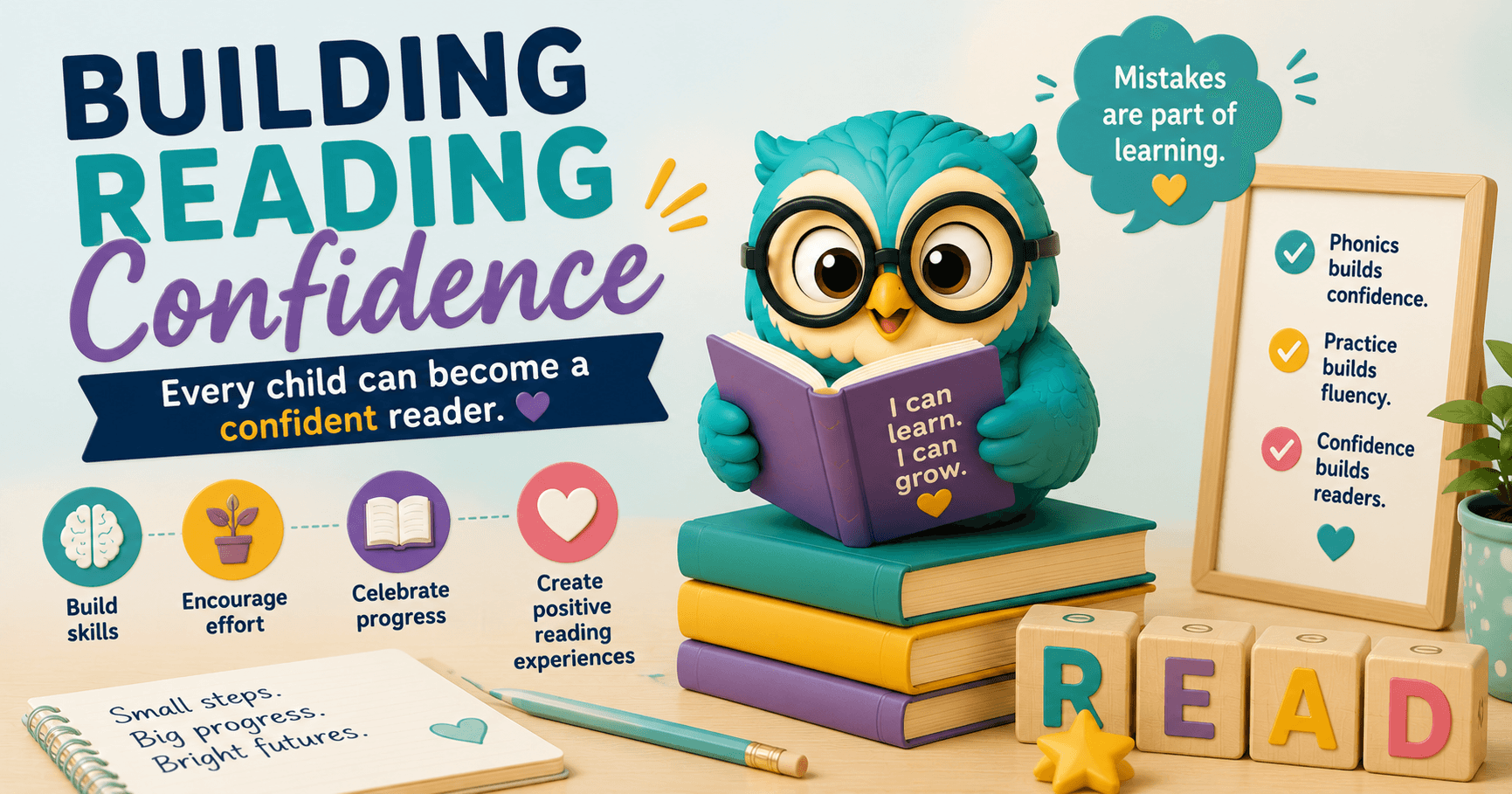
Or simply someone who helps them believe that mistakes are part of learning.
Confidence is built one experience at a time. One sound recognised. One unfamiliar word attempted. One sentence read independently. One moment when a child realises:
“I did that myself.”
Those moments matter. Because confident readers are not children who never struggle. They are children who believe they have the tools to keep going.